 EntrePoker
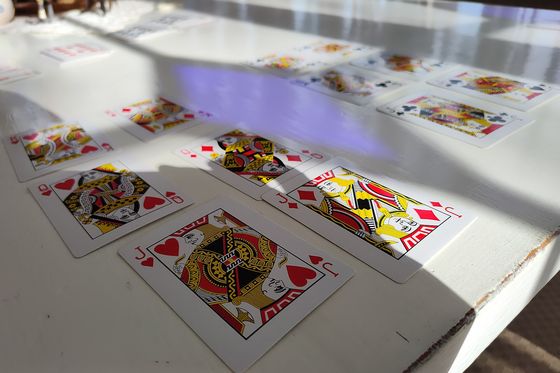
Thin value on the river: when to bet a marginal hand
Betting for value with a hand that is not a monster separates solid players from the rest. When it works, against whom, and at what size.
Read the article →Poker, culture, industry and technology. Stories and analysis that go beyond table strategy, showing where the game is heading and why it matters.
Betting for value with a hand that is not a monster separates solid players from the rest. When it works, against whom, and at what size.
Read the article →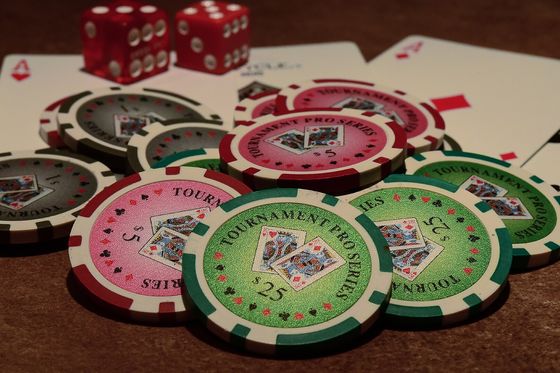
How to work out pot odds as a ratio and a percentage, compare them with your equity from outs, and decide whether to call a draw. Worked examples with checked math.
Read the article →
Why moving up in stakes feels less like growth and more like trespassing, and what that discomfort is actually telling you.
Read the article →
How the mystery bounty format reshaped tournament design, and what its rise says about where live poker is headed.
Read the article →
Bluffing frequency isn't guesswork — it follows from pot odds. Here's the arithmetic poker players used for decades, no software required.
Read the article →
What to write down after every poker session, how to review it weekly and why a simple log teaches you more than remembering hands.
Read the article →
A sober look at where women actually earn in poker today — fields, cashes and the structural reasons the numbers still lag.
Read the article →
A sober, practical look at how problem gambling actually shows up, and what changed in 2026 for players who want to check themselves honestly.
Read the article →How to use the biggest stack under ICM pressure: who to pressure, who to respect and when to slow down in the late stages of a tournament.
Read the article →
Buy-ins are the headline number. We break down the real cost of a poker festival trip — and what the industry rarely says about it.
Read the article →
A sober look at licensing fees, tax rates and player protections across major poker jurisdictions, without the marketing language.
Read the article →
A look at virtual reality poker rooms, what the technology can and can't do today, and whether they change how people actually play.
Read the article →What equity is, how to count your outs and how to turn them into a percentage in seconds with the rule of 2 and 4, with worked hands.
Read the article →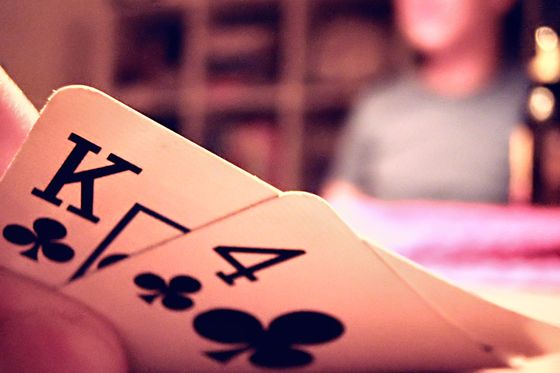
How poker's culture of silence around problem play took shape, and what it actually takes to say something to a friend.
Read the article →
Colombia built Latin America's first licensed online poker framework. We look at how it happened and what it means for the region.
Read the article →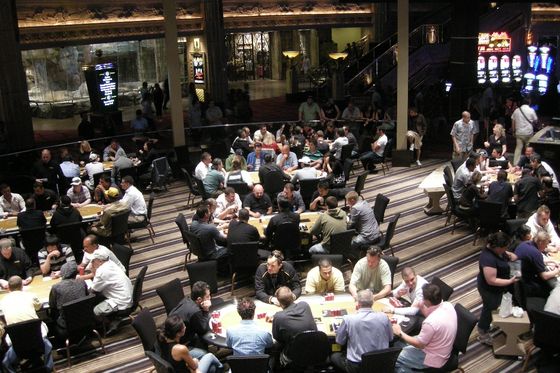
Why many casinos keep poker rooms that barely break even, and what that arrangement says about the game's real place in gambling.
Read the article →The hoodie-and-headphones look telegraphs a certain kind of poker player. We trace where it came from and what it actually signals at the table.
Read the article →You opened, got 3-bet and have three options. How to decide based on position, stack depth, who is 3-betting you and how well your hand plays in a 3-bet pot.
Read the article →Before the flop you can already know what your top pair is worth. The ratio between the effective stack and the pot decides whether one pair is a stack-off hand or a small-pot hand.
Read the article →
Top pair weak kicker, second pair, one pair on a scary board. Why those hands want a small pot and how to keep it small without giving up the hand.
Read the article →You c-bet the flop, got called, and the turn is out. Firing again or slowing down is one of the costliest decisions in cash games. How to choose on purpose.
Read the article →Entering a tournament after several levels saves hours but seats you with fewer big blinds. What you gain, what you lose, and how the structure decides.
Read the article →You got 3-bet and must choose between folding, calling or raising again. When a 4-bet is for value, when it is a bluff, which hands to use and how big to go.
Read the article →The same pocket aces play differently on K-7-2 than on 9-8-7 with two hearts. How to read flop texture and what it changes about your bets, bluffs and folds.
Read the article →Calling with 4-4 to hit a set looks free and is not. The real math of set mining, the stack depth it needs, and when folding the small pair is the right play.
Read the article →Most players lose more by not betting their good hands than by bluffing badly. How to value bet, how to size it and when thin value is worth it.
Read the article →The check-raise is your most aggressive option out of position. When it works for value, when it works as a bluff, and why most players misuse it.
Read the article →
The small blind is the most expensive position in poker. It's not even a good place to learn. It's where you'll lose money fast if you don't understand why you're losing it.
Read the article →Many players treat the river as a calculation: pot odds, equity. But the river is where that math breaks down and you have to know what your opponent could actually hold.
Read the article →Most players spend years improving their postflop game while forgetting that 80% of your earnings or losses is decided before you see a single card.
Read the article →
The number a player says they make per hour is almost never the number they actually make. What your real hourly rate looks like once rake, variance, and non-playing time are counted.
Read the article →You've lost four sessions in a row and can't tell if it's bad luck or if something in your game broke. Here's the honest way to find out, without excuses or self-punishment.
Read the article →Calling with a draw is the obvious play. Betting it instead opens up two roads to winning the pot instead of just one.
Read the article →
Winning three sessions in a row is not a signal to move up. Here are the real signals that are, and why they look almost nothing like what most players assume.
Read the article →Moving from a nine- or ten-handed table to a six-max one means fewer opponents, which changes your range, your aggression, and the kind of patience you need.
Read the article →
Raising over an open and a call sounds aggressive until you understand the math behind it; here is the real mechanics of the squeeze play and the most common mistakes when running it.
Read the article →You've heard a shaking hand means a bluff and staring into someone's eyes means strength. Almost all of that is cinema folklore. Here's what's actually worth watching for at a live table.
Read the article →The same card game can call for two completely opposite attitudes depending on whether the tournament allows rebuys or is single-bullet only. Here's the real difference.
Read the article →You're down two buy-ins and a little voice is telling you a fixed limit doesn't make sense because 'the table is good.' That voice is exactly why the limit exists.
Read the article →Taking a shot at stakes your bankroll doesn't fully support can be a smart calculated move or the start of a disaster; the difference lies in the rules you set before sitting down, not in how the first session goes.
Read the article →
You're about to open the client in ten minutes with your head somewhere else entirely. Here are the routines that genuinely change how you play, not superstitions dressed up as prep.
Read the article →Playing heads-up is a different game from full-ring poker. Here are the core adjustments in range, aggression, and reads you need to avoid bleeding chips.
Read the article →Why losing one big pot at a final table can hurt more than your stack size suggests, and how to think about that pressure without drowning in formulas.
Read the article →
Applying one bankroll rule to both cash games and tournaments is the quiet mistake that busts technically sound players. Here's why variance treats the two formats so differently.
Read the article →Four cards, two possible pots, and one rule that changes everything: here are the fundamentals of Omaha Hi-Lo before you sit down at your first table.
Read the article →The difference between a home game that becomes a monthly tradition and one that dies after the first fight is organization, not the luck of the night.
Read the article →
You're good online and figure a live table will just be slower. There's more that's different than you'd think, and several things will catch you off guard if you haven't thought them through.
Read the article →"Never limp" is one of the most repeated pieces of modern poker advice, but like every absolute, it breaks down in certain contexts. Let's look at when open-limping actually makes sense and when it's just an old habit.
Read the article →
Almost every player believes they remember how last month went. Almost all of them are wrong in a predictable way. Why tracking your results isn't optional if you take the game seriously.
Read the article →Having someone else put up the money sounds like the risk disappears. In a staking deal, the player is still risking something, not cash, which makes it easy to underestimate.
Read the article →You're heading to your first live table and you're more worried about not knowing how to handle chips than about strategy itself. Here's the basics you need before you sit down.
Read the article →In fast-fold poker you fold and you're instantly at another table with a new hand. Here's what actually changes strategically once fixed-opponent reads disappear.
Read the article →Using the same strategy against a calling station and a nit is one of the most common mistakes, and one of the easiest to fix overnight.
Read the article →You'll be out of position in nearly half the hands you play; this is not an exceptional situation but a core skill that most players never train on purpose.
Read the article →You closed the session and you're already thinking about something else. That's exactly the moment most players waste, and the one that improves your game the fastest if you use it.
Read the article →Before you pay anyone to teach you poker, ask these questions first: the wrong coach can push you into a style that isn't yours and stall your progress for months.
Read the article →You've been winning for weeks and feel like you've finally cracked the game. This is exactly the moment where most players quietly ruin their own run.
Read the article →The bubble changes the math of every hand, so here is how to think through those levels without folding everything and without ignoring the pressure either.
Read the article →
Making the money into a Day 2 with chips is only half the job. Here's how to prepare your body, your mind, and your notes before you sit back down.
Read the article →You already put chips in the pot before looking at your cards. That changes how you should think about defending the big blind, for better and for worse.
Read the article →By the time you notice you're tilting, you've usually already burned three buy-ins. Here are the early signals that show up long before things get out of hand.
Read the article →Makeup is the part of staking almost nobody explains well before signing, and the one that ends up deciding whether a deal feels fair or turns into a trap.
Read the article →Playing poker to supplement a salary and playing it as your only source of income aren't the same game at different intensities. They're two entirely separate forms of discipline.
Read the article →With few chips left in a tournament, subtle decisions disappear. Only two remain: push everything or fold. Here's how to think through that decision.
Read the article →Betting more than the size of the pot sounds like an amateur move until you understand the polarized logic behind it: here's when the overbet is a serious tool and when it's just a shot in the dark.
Read the article →
Before you say anything at the table, your bet size has already told your opponent something. Here is how to think about sizing without drowning in solver math.
Read the article →
Running hands through a solver doesn't make you a better player if you don't know what to do with the numbers; here's how to build a full study routine instead of just a screen full of percentages.
Read the article →
Dropping stakes feels like a step backward, which is exactly why most players do it far too late, after the bankroll has already taken a beating. How to make the call before ego makes you pay for it.
Read the article →Your hand is worth what it makes and what it removes from your opponent's range. That's how blocker thinking works.
Read the article →Betting the flop just because you opened preflop stopped being good enough a while ago. Here's what actually matters before you fire a continuation bet.
Read the article →The rules that serve you well heads-up change completely once three or four opponents are looking at the same flop as you.
Read the article →Playing with the same three people every time gets stale fast, so here is what it actually takes to build a local poker group that grows and lasts.
Read the article →You've been losing for weeks no matter what you do, and you've started doubting your entire game. Here's how to get through a downswing without letting it eat you alive.
Read the article →The deeper the stack, the more postflop decisions open up. Here's what changes when you have plenty of room to maneuver.
Read the article →
The level where antes appear is a real strategic break, not a structural footnote. Here's what actually changes and why it matters.
Read the article →Adding tables looks like the obvious way to earn more per hour. The catch is that every extra table is paid for with worse decisions, and that cost never appears on screen.
Read the article →A 3-bet in position is the tool that makes life miserable for your opponent before a single community card even shows up.
Read the article →You made the final table and someone proposes a deal. Here's the plain-language logic behind chip chops and ICM deals, and what to weigh before agreeing to one.
Read the article →Every time someone limps in front of you and you just call along, you're passing up one of the most profitable plays in full-ring poker. Here's how to build an isolation range that actually works.
Read the article →The bonus that says one hundred percent up to a huge figure is almost never cashed in full. What matters is how it releases, how fast, and playing what. A guide to reading the fine print without being a lawyer.
Read the article →In a tournament with rewards for eliminations, your opponent's chips are worth more than yours. That changes which hands you call with, when, and against whom. A formula-free guide to understanding the format before you play it.
Read the article →It's not where you sit at the table. It's which table you choose. It's 80% of your results and almost nobody talks about it because there's no way to monetize an educational video about waiting.
Read the article →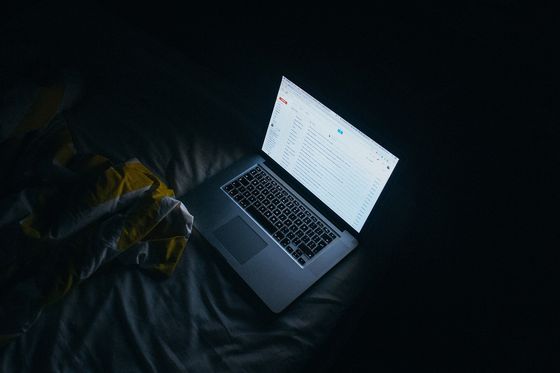
On April 15, 2011, the US Department of Justice shut down the world's three biggest poker sites in a single morning. What happened, why it happened, and how that day designed the online poker you log into today.
Read the article →For decades, taking ten minutes over a decision was legal and even prestigious. Today's big tournaments put you on a timer. What the shot clock is, where it came from, and how it changes the way the game is played.
Read the article →A 2019 cash-game scandal exposed how hole-card data could leak before broadcast, quietly rewriting how poker streams are built and delayed.
Read the article →How the EPT and WPT chose their host cities over two decades, and what that geography reveals about regulation, tourism and poker's global spread.
Read the article →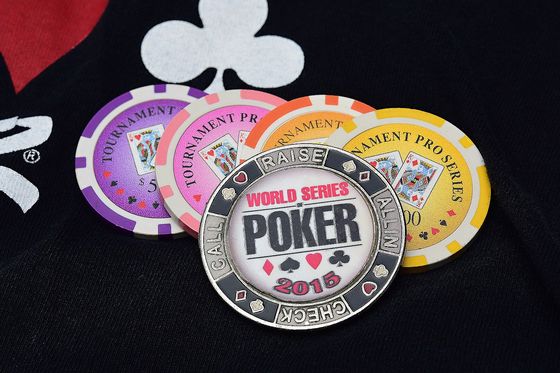
How the WSOP delayed its Main Event final table for nearly a decade to build television drama, and why the format was quietly folded in 2017.
Read the article →As vlogs and streams replaced newsrooms, we look at what poker journalism actually did and who, if anyone, is still doing it.
Read the article →How commissions and revenue-share deals shaped poker's online media, and what to actually check before trusting a 'best sites' ranking.
Read the article →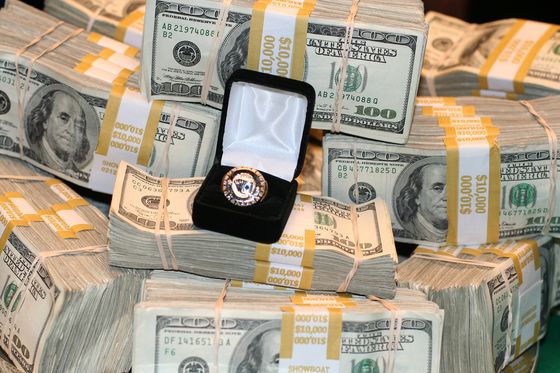
A look at the origins, growth and diluted-but-real prestige of the WSOP bracelet, from Binion's Horseshoe to today's global calendar.
Read the article →Why exhaustion among high-volume online poker players is less a personal failing than a structural feature of how the games were built.
Read the article →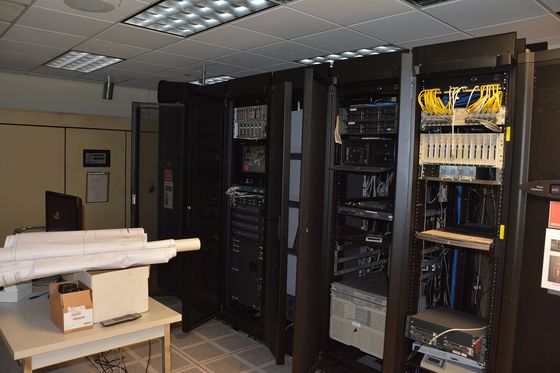
A look at how tracking software and HUDs divided online poker into two camps, and why the site rules built around them still satisfy almost no one.
Read the article →How the World Series of Poker's move online, accelerated by the 2020 pandemic, turned the bracelet into a contested symbol of what counts as proof.
Read the article →A history of the Big Game and the private high-stakes cash games, from Texas road gambling to Bobby's Room to today's live streams.
Read the article →Satellites don't sell a discount seat to a bigger tournament. We look at what they actually buy, and what the Moneymaker story left out.
Read the article →Long tournament days reward more than skill: sleep, food and basic physical care shape how clearly a poker player can think by hour ten.
Read the article →A look at the deposit caps, session timers and self-exclusion tools built into regulated online poker, where they came from and how they actually work.
Read the article →
How the Latin American Poker Tour changed the map for local players, without turning the game into a shortcut to income.
Read the article →How a 36-card variant born in Asian private games became a fixture of televised high-stakes poker, and what that says about the industry.
Read the article →Poker rooms rarely earn what slot floors do per square foot. We look at why casinos keep them anyway, and what that trade-off means.
Read the article →From the 1988 WSOP final table to the Durrrr Challenge, we revisit the heads-up duels that defined poker as spectacle.
Read the article →AlphaZero taught chess and Go to master themselves through self-play. Poker researchers borrowed the idea, then discovered why hidden information changes everything.
Read the article →Long before AI could bluff, it had to solve poker. A look at how the game became a proving ground for machine learning.
Read the article →
How demographics, payment technology and a decades-old gaming law turned Mexico into the region's most dynamic poker scene.
Read the article →From $565 mega-field events to seven-figure super high rollers, buy-ins pulled the tournament calendar toward two extremes.
Read the article →A look at the geography, regulation and community structures that explain why players from Argentina, Brazil, Chile and beyond keep reaching deep into major online tournaments.
Read the article →From Libratus and Pluribus to GTO solvers, how artificial intelligence rewrote modern poker, changed how we study, and why it's good news for the everyday player.
Read the article →
From the LAPT to Brazil's BSOP, from booming Spanish-language online poker to Latin players lighting up global fields: why 2026 is the region's breakout poker year.
Read the article →From the smoke-filled card room to the 2003 Moneymaker moment to Twitch streaming: how television and the internet turned poker into a global spectator sport.
Read the article →We publish slowly and without filler. To catch every post, follow us on Facebook.