 EntrePoker
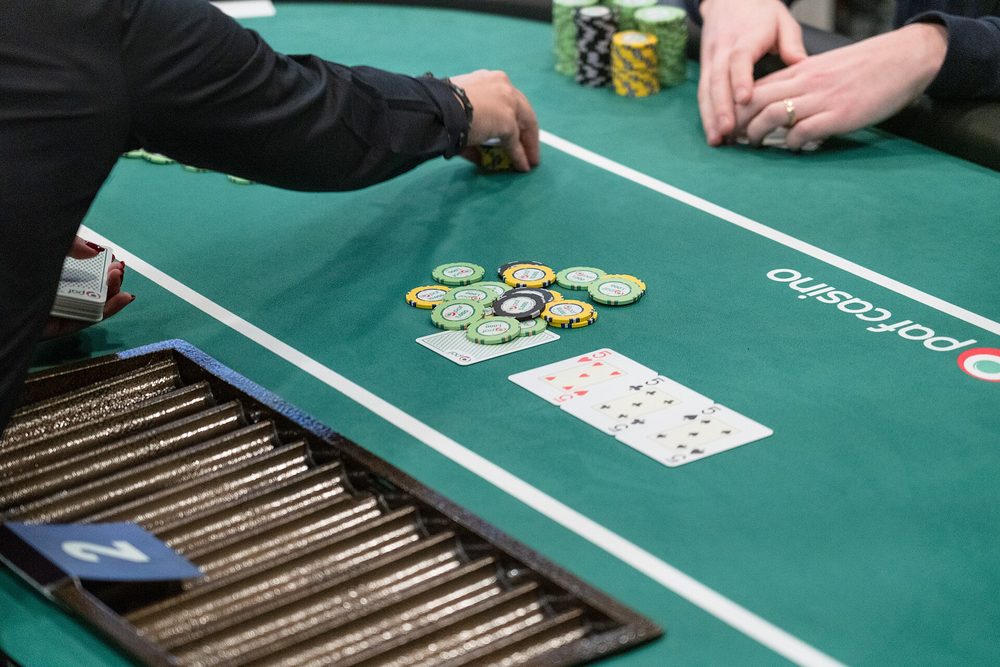
You are sitting at a live cash table and the dealer is about to deal. The player to the left of the big blind pushes a bet into the middle and says "straddle." Nobody has seen a card yet, but the pot is already bigger than usual and the action will start one seat further left than normal. If this is your first time, the natural reaction is to look at the dealer and wonder whether you need to do something different. You do: the table just got bigger, and it helps to know how.
What a straddle is
A straddle is a voluntary blind bet posted before the cards are dealt. It is usually twice the big blind and, by tradition, it is posted by the player to the left of the big blind, the seat known as under the gun. It is a live cash game custom. It is not used in tournaments, and most online tables do not offer it.
The classic UTG straddle is "live." That means the straddler acts last before the flop and can raise even if everyone else has just called. It works like the option a big blind already has, except that this time it belongs to someone who put extra money in without looking at their cards.
How it changes the table
In practice, a straddle works as a third blind. The game plays bigger, because stacks measured in straddles are half as deep as stacks measured in big blinds. A 100 big blind stack plays like a 50 stack. Pots grow faster, there is less room to maneuver after the flop, and decisions for a whole stack come sooner than you expect.
The mood changes too. A straddle tends to bring more hands played and more raising, and when someone posts one, another player sometimes answers with a re-straddle. For some players that energy is the appeal. For others it is just a table that suddenly got more expensive.
Why it loses for the player who posts it
The straddler puts money in blind, with a random hand, before knowing what they were dealt. With the UTG straddle, they will also be out of position after the flop against most of the players who call. Playing out of position with an average hand is a disadvantage you pay for on every street.
Acting last before the flop gives some of that back, but in general theory it does not give back enough. A larger blind, a random hand and bad position add up to a losing bet for whoever posts it. The cost comes with the bet itself, the same way any blind costs something even on the nights you win the pot.
Variants depend on the house
Rooms do not all run it the same way, so ask the dealer or the floor before you sit down. The common versions are these:
- Button straddle: posted by the player on the button. Who acts first changes from room to room, so ask.
- Mississippi straddle: allowed from any position, and often used on the button.
- Double straddle or re-straddle: another player doubles the first straddle and the game moves up another step.
- Mandatory straddle rounds: the table agrees that everyone posts one in turn for a stretch of play.
Why people post it anyway
The reasons are rarely mathematical. Some players want to create action at a slow table. Others post it because the table agreed to, and sitting still while everyone else straddles changes the mood. Some use it to look loose so opponents relax. And at tables where everybody straddles out of habit, refusing can feel like breaking a tradition.
Knowing this helps you avoid taking it personally. When someone invites you to straddle, it is rarely a play against you. It is social pressure and a wish to play bigger.
How to adjust when a straddle is on
Start by counting from the straddle instead of the big blind, including the size of your opens. After that, these adjustments usually make sense:
- Open-raise sizes are counted from the straddle, not from the big blind.
- Tighten your early positions, because stacks are effectively shallower.
- Pots get big faster, so hands that need deep stacks, like small pairs and suited connectors, lose some of their value.
- Check your bankroll: the game is effectively one level higher than the sign on the table says.
When it makes sense and when to say no
As a profit play, a voluntary straddle almost never makes sense. If you post one, do it because you want a livelier table, your bankroll fits that level, and you accept that you are paying for entertainment rather than an edge. Declining is perfectly fine. And if you do straddle, say it clearly before the cards are dealt so the dealer and the table can record it correctly.
If you want to go deeper on table manners, the dealer and floor roles and bankroll management, we have articles on each topic on the blog.
18+ | Play responsibly.
If this is your lane, these go deeper: cash games vs tournaments and reading your opponents. For more poker writing in English and Spanish, follow us on Facebook.
EntrePoker has affiliate agreements with two rooms today: Americas Cardroom, on the WPN network, and WPT Global. Every other room we cover is a plain link to its own site.
Visit Americas Cardroom Visit WPT Global
18+ Affiliate links: if you sign up through them, EntrePoker may earn a commission at no extra cost to you. It does not change what we write. Full disclosure · Responsible gaming