 EntrePoker
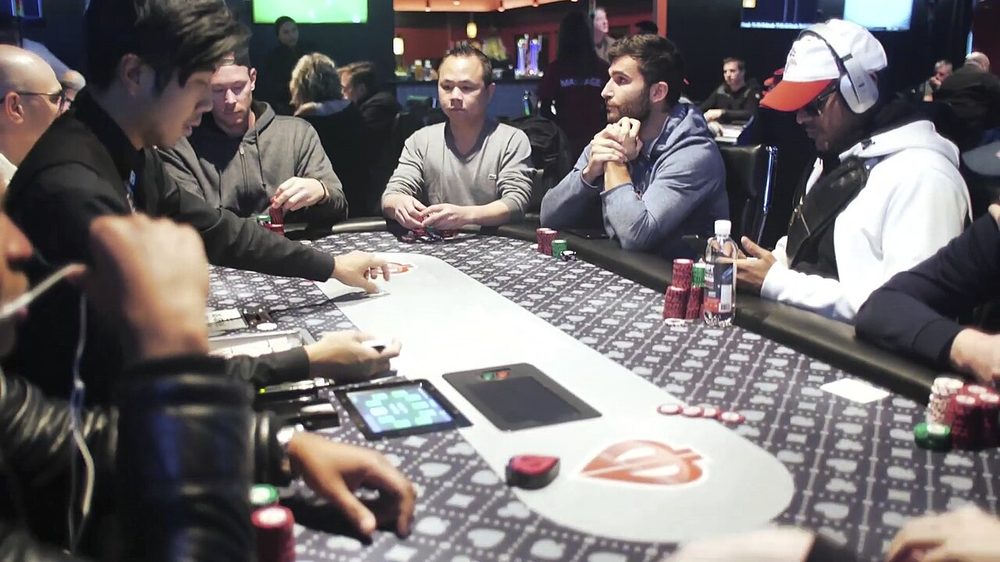
You see an overbet and your first instinct is distrust
Someone bets more than the size of the pot, and most players' first instinct — especially those coming from a more traditional style of poker — is to assume it's a mistake or a desperate bluff. For a long time that instinct made sense, because the overbet used to be misused: an emotional play from someone trying to 'make sure' they don't get called, without thinking about range structure. But in modern, well-understood poker, the overbet is a precise strategic tool, not excess aggression. The key is understanding what problem it solves that a normal bet doesn't.
The overbet isn't about your hand, it's about the shape of your range
The theoretical justification for the overbet doesn't depend on whether your specific hand is strong — it depends on how your entire range is structured at that point in the hand. An overbet works well when your range at that spot is polarized: on one side you have very strong hands that want to get in as much money as possible, and on the other you have very weak hands with no showdown value, which are going to lose anyway if the opponent calls any bet size. When you don't have middling hands in that range — the ones that would prefer a smaller size so as not to scare off moderate hands — the overbet becomes a more efficient tool than a standard bet.
Which opponent ranges the overbet works best against
The overbet is especially effective against opponent ranges that are also polarized, or that carry a lot of medium-strength hands unable to call a big bet comfortably. If the opponent reached that street with a wide range of mediocre hands — small pairs, missed draws, hands that picked up some showdown value but not much more — an overbet puts them in a terrible spot: overpay with a hand that's probably behind, or fold and give up the pot. Against an opponent whose range is mostly made up of well-defined medium-to-strong hands, the overbet loses some effectiveness because fewer of those hands feel forced to fold under extra pressure.
- The overbet works best with polarized ranges: very strong hands and clear bluffs, with no middling filler
- It's most effective on streets where the opponent's range carries a lot of uncomfortable medium-strength hands
- The river is usually the natural street for an overbet, since there are no more cards coming that could change the decision
- You need enough credible bluff combinations in your overbet range, or it becomes easy to read
- Don't use the overbet as an emotional reaction to 'wanting them to fold' — it needs to be justified by range structure, not the impulse of the moment
The overbet doesn't ask the opponent whether they have a good hand — it asks whether they have a hand that can withstand an extreme decision.
The river is where the overbet shows up most often, and for good reason
Although the overbet can be used on any street, it shows up more often and with stronger theoretical justification on the river, the final card. The reason is simple: on the river there's no more future equity to consider — it all comes down to immediate value and bluffs. That simplicity is exactly what a polarized range needs to work well — there's no need to leave room for a mediocre hand to 'improve later,' because there is no later. On earlier streets, an overbet also has to account for the chance the opponent has equity to improve, which complicates building the ideal range somewhat.
Your bluff range needs to be credible, not just present
A common mistake when adding the overbet is only using it with monster hands, with no real bluffs behind it. If your opponents notice you only overbet with the nuts, they'll start folding to any overbet, which makes the play profitable in the short term but completely transparent in the long term. The overbet needs some well-chosen bluffs — usually hands that had good equity earlier but missed everything by the river, or hands that block the opponent's strong combinations — to stay balanced and remain feared going forward.
The exact sizing matters more than it seems
Not all overbets are the same. A 1.2x-pot overbet sends a different message than a 2x-pot overbet, and that difference directly affects which of the opponent's hands can call comfortably and which can't. The bigger the overbet, the closer it gets to an all-or-nothing decision for the opponent, which narrows the hands that can justify calling. Choosing the exact size depends on how much you need the opponent to fold their medium hands for the play to be profitable — there's no universal correct number, it depends on the spot.
The overbet rewards planning, not improvisation
The best way to think about the overbet is as a decision prepared in advance, not something you come up with on the spot at the river. If you've been building a range across earlier streets that naturally ends up polarized at this point — because of how you bet, because of how the opponent showed weakness — the overbet on the river feels like the logical next step, not a shot in the dark. When the overbet appears out of nowhere, without the hand having been built toward it, it's usually a sign the play is driven by impulse rather than strategy.
If this is your lane, these go deeper: why position wins pots and bankroll management. For more poker writing in English and Spanish, follow us on Facebook.