 EntrePoker
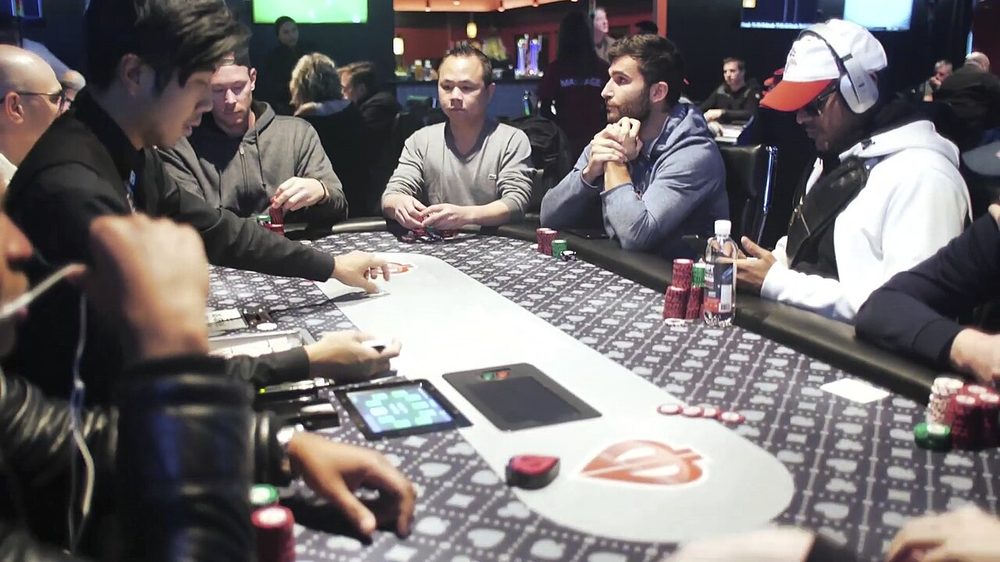
There's a scene we all carry in our heads: the player who stares down a rival, spots a microscopic blink and announces it's a bluff. Great cinema, terrible poker. Real opponent-reading is not a mind-reading trick; it is slow, cumulative, and far less flashy work, built from information your opponent hands you bet after bet.
The good news is that the realistic version can be learned, and it doesn't rely on some special gift for "feeling" people. It relies on knowing where to look. And where to look is almost never the face.
Forget the Hollywood myth
The most common beginner mistake is believing that reading someone means guessing their exact two cards from a gesture. That almost never happens, not even among professionals. What a good player actually does is far more modest and far more useful; they gather small clues, above all how the opponent bets, and gradually narrow the range of hands that opponent could hold until a decision becomes clear.
The hierarchy of information matters, and it's worth keeping in mind before any session:
- Betting patterns and sizing: the most reliable source, available in every hand, online and live.
- Timing tells: how long someone takes to act. Subtle, but valuable and hard to fake consistently.
- Physical live tells: noisy, contradictory and often acted. A seasoning, never the main course.
Almost all of your effort should go to the first item. It carries the most weight and it's the only one that works across every format.
Betting patterns: the most reliable information
Every action an opponent takes, such as checking, betting, raising, or folding, is a data point. And unlike a raised eyebrow, a betting pattern doesn't lie by accident: most players repeat the same tendencies hand after hand without noticing. That's the gold mine.
Bet sizing tells a story
Pay attention to the sizing. Many recreational players bet big when they have a strong hand and small when they want to "see it cheap" or are making a timid bluff, giving away the value of their hand in the size of the chip itself. Others do the opposite: they min-bet the nuts to look weak. What you're after isn't a universal rule, but that person's rule. Watch what each opponent does in hands that reach showdown and you'll see their particular code repeat.
Some questions worth asking at the table:
- Does this opponent bet differently for value than when bluffing, or always use the same size?
- Do they raise before the flop with lots of hands or only the premiums?
- Do they keep firing on the turn and river, or give up the moment they meet resistance?
- Do they check-raise? And if so, which hands show up with that move at showdown?
Think in ranges, not exact hands
This is the mental shift that separates the amateur from the thinking player. Instead of asking "what two cards does he have?", ask "what set of hands would play it this way?". That set is their range.
A concrete example: a tight opponent raises from early position. You don't know their exact cards, but you do know a player like that rarely opens junk from there; their likely range is a handful of strong hands. If the flop comes with low cards and they keep betting hard, that range barely changes. Against it, your middle pair is worth much less than it looks. You didn't guess their hand; you read their range, and that was enough to make a good decision.
Don't try to read the hand. Read the player, deduce the range, and let the math do the rest. Guessing is a casino trick; thinking in ranges is the real skill.
Timing tells: the clock talks too
How long someone takes to act is information, and it works both online and live. With the enormous caveat that no timing rule is a law: they are tendencies, not certainties.
- An instant bet usually signals an easy, pre-made decision: often a marginal hand or a prepared semi-bluff, though it can also be obvious value. It's rarely a monster the opponent was thinking hard about how to maximize.
- A long pause before betting often reflects a genuinely strong hand: the opponent is calculating how much they can extract. Live, fake hesitation followed by a big bet is usually strength, not weakness.
- A long pause before checking or folding tends to be a genuinely tough decision with a mediocre hand.
The key is to build a pattern: how this particular opponent behaves, not what a manual says. And remember that strong players know these tells and sometimes reverse them to fool you, so treat them as one more piece of the puzzle.
Physical tells: real, but unreliable
They do exist. In live poker there are gestures that, on average and in untrained players, point in one direction. The classics people cite are shaking hands (often adrenaline from a very strong hand, not bluffing nerves), glancing at chips and looking away quickly, or freezing and going very still after a big bet. All of them show up in any guide on the subject.
The problem is everything that list leaves out:
- They contradict each other across people. The same gesture means opposite things in two different players. There's no universal dictionary.
- Many are faked. An experienced opponent knows you're watching and acts weak with strong hands, or strong when bluffing. The "obvious" tell can be a trap.
- They're noisy. People scratch, sip water and shift around for a thousand reasons that have nothing to do with their cards.
That's why the practical rule is clear: a physical tell can confirm a read you've already built from the betting, but it should never be the main reason for a big decision. If your only evidence for calling a huge bet is "his hand looked shaky," you're almost always making a mistake.
Classify your opponents: four basic types
Before reading a specific hand, label the player. The most useful framing combines two axes: how many hands they play (loose or tight) and how they play them (passive or aggressive). That gives four archetypes:
- Tight-aggressive (TAG): plays few hands but plays them hard. When they bet, respect it; their range is usually solid. It's the most common winning style.
- Loose-aggressive (LAG): plays many hands and applies constant pressure. Dangerous, but they also bet and raise with weak ranges, so you can call them lighter than usual once you confirm the pattern.
- Loose-passive (the "calling station"): calls too much and rarely raises. Against them, stop bluffing and bet your good hands for value without fear; they'll call with worse.
- Tight-passive (the "rock"): waits for premium hands and rarely raises. If they suddenly show aggression, run unless you have something very strong.
Slapping a label on each opponent in the first few minutes already gives you a huge edge, because it turns every bet they make into contextual information instead of a blank mystery.
Watch when you're not in the hand (and don't give yourself away)
Most players check out the moment they muck their cards. That's exactly the moment to go to work. Free of the pressure of your own hand, you can calmly observe how everyone else acts, which sizes they use, and what they show at showdown. That free information is what builds your reads for later.
A couple of habits that pay off big:
- Take notes, especially online. Almost every room lets you write a note on an opponent. "Bluffs the river with big sizing," "only raises premiums," and "calls too much on the flop": these three lines save you from tough decisions the next time you run into that person.
- Always watch the showdown. Every hand that gets shown down is a free answer: it tells you what that opponent bet, raised or called with. It's the best calibration for your reads there is.
And the flip side: while you read, you're being read too. The defense is consistency. If you always take a similar amount of time to act, use bet sizes that don't depend on your hand's strength, and hold a steady physical posture live, you give no one a pattern to exploit. The goal isn't to be mysterious, but to be boringly consistent: when you behave the same with the best hand and the worst bluff, there's simply nothing to read.
Frequently asked questions
Can you read opponents in online poker?
Yes, just differently. Online you don't see hands or faces, so reads are built on betting patterns, the sizes each opponent chooses, the timing of their decisions and your HUD stats if you use one. In many ways it's a cleaner read, because an opponent can't fake a hand tremor: only the chips they move count.
What is the most reliable tell?
Betting patterns and bet sizing. How someone bets when they check, when they raise, which sizes they choose on each street reveals far more than any physical gesture, and it works the same online and live. An opponent who only raises with strong hands is handing you information every hand, whether or not their face shows anything.
Are physical tells overrated?
Hugely. Movies sold the idea that a good player reads your hand from a blink, but in practice physical tells are noisy, contradict each other from player to player, and many opponents fake them on purpose. They're a marginal data point that can confirm a read already built on the betting, never the basis for an important decision.
How do I stop giving off my own tells?
Standardize everything you can. Take a similar amount of time to act with strong and weak hands, use consistent bet sizes that don't depend on your hand's strength, and keep a steady physical routine when playing live. If you behave the same way with the nuts as with a bluff, there's nothing to read.
Reading opponents is just one piece. If you're just starting out, begin with our guide to start playing online poker, and protect your winnings with our bankroll management guide. For more strategy and updates, follow us on Facebook.