 EntrePoker
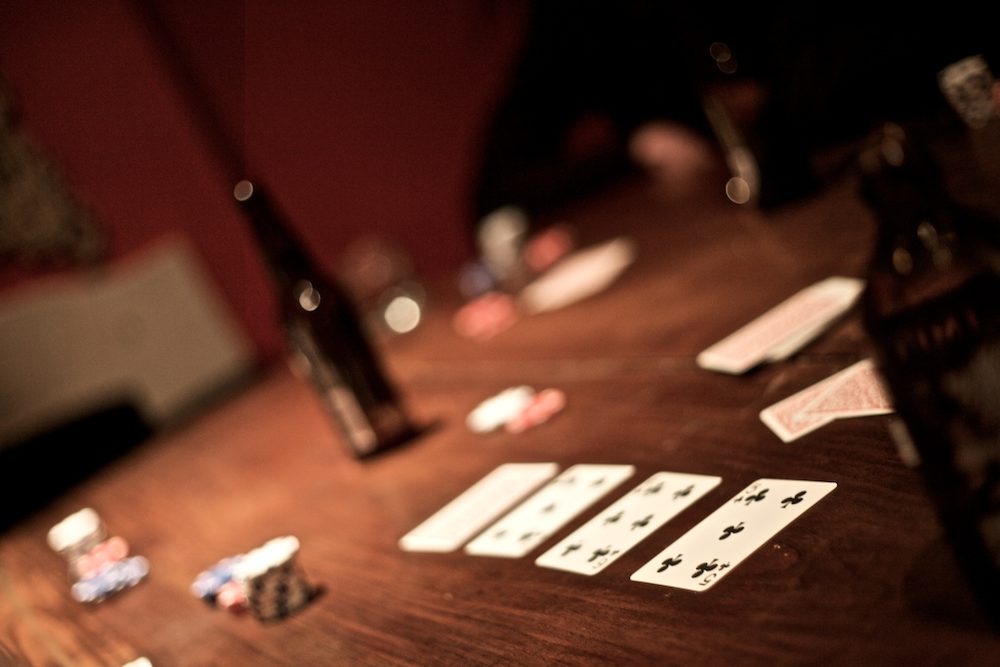
The Big Game is not one game. It is a name — half legend, half shorthand — for whatever the highest-stakes private cash game happened to be in a given room at a given time, and above all for the version that sat in Bobby's Room at the Bellagio through much of the 2000s, where a small rotating cast of players moved sums across the table that made tournament buy-ins look modest by comparison.
Tournaments are the part of poker the public sees: a final table, a clock, a trophy, a number everyone can agree on. Private cash games are the part that stayed mostly invisible for decades, even though they did more to shape how the game is played, financed and talked about than any single tournament ever did. The players who built poker's modern reputation for skill learned it there, at stakes with no structure, no rebuy limit and no cameras — until, eventually, there were cameras.
This is the lineage we want to trace: from the back rooms of mid-century Texas, through a single legendary session at a downtown Las Vegas casino, into the glass towers of the Strip, onto television, online, and finally onto the live streams that carry the same appetite for watching strangers risk real money at a table.
Before Vegas had a name for it
Long before Las Vegas had a poker economy worth talking about, a handful of Texans were running one on the road. Doyle Brunson, Thomas "Amarillo Slim" Preston and Brian "Sailor" Roberts spent the 1950s and 1960s driving between small Texas towns, playing in games that were illegal, occasionally dangerous, and entirely dependent on reputation rather than regulation. There was no house, no license, no dealer paid by a casino. There was only the game, the money on the table, and whoever else showed up.
As poker lore has it, the game that gave Las Vegas its origin myth was arranged in 1949 by Benny Binion, who put the seasoned Texas grinder Johnny Moss across the table from Nick "The Greek" Dandalos, a well-known high-stakes gambler from the East Coast, in a marathon heads-up match at Binion's Horseshoe that ran for weeks. Whatever the exact truth of the details that have been retold and embellished for seventy-odd years, the session is widely credited with convincing Binion that a public event built around this kind of private high-stakes appetite could draw a crowd — an idea that became the World Series of Poker in 1970.
Bobby's Room and the modern Big Game
By the time the Bellagio had established itself on the Strip after opening in 1998, its high-limit room — informally, and eventually officially, called Bobby's Room after Bellagio president Bobby Baldwin, himself the 1978 World Series Main Event champion — had become the closest thing poker had to a standing institution for its highest-stakes cash games. The room's regulars in the 2000s formed a short, mostly stable list: Doyle Brunson, Chip Reese, Johnny Chan, Barry Greenstein, Jennifer Harman, Ted Forrest, Sammy Farha, and, as the decade wore on, a younger cohort that included Phil Ivey and Gus Hansen.
Chip Reese, inducted into the Poker Hall of Fame in 1991 and widely regarded by his peers as the best cash-game player of his generation, was the figure most associated with the Big Game's reputation for skill over spectacle. He died in December 2007, and the tributes that followed — from players who rarely agreed on much else — said the same thing in different words: that the real measuring stick in poker was not a bracelet but years of winning against the best players willing to sit down with you, for stakes with no ceiling.
The Big Game never had a leaderboard, a clock or a trophy — only years of results and the willingness of the best players to keep sitting down.
The most-told single story from this era involves a Texas banker, Andy Beal, who between 2001 and 2006 challenged a rotating group of Bellagio pros — later nicknamed "the Corporation" — to heads-up limit hold'em for stakes far above the room's normal ceiling. Press accounts at the time reported swings in the millions in single sessions, including a widely reported win of roughly $11.7 million for Beal in 2004 and a final 2006 session in which he was reported to have lost around $16.6 million, after which he stepped away from the match for good. The saga was documented in Michael Craig's 2005 book, "The Professor, the Banker, and the Suicide King," which remains one of the better windows into how this world actually worked.
Television turns the private room into public theater
For most of poker's history, the biggest cash games were, by definition, private: you needed a seat, or a reputation, or both, just to watch. That changed with High Stakes Poker, which ran on GSN from 2006 to 2011 and was the first show to put hole-card cameras on a recurring cash game rather than a tournament final table. Hosted by Gabe Kaplan and A.J. Benza, it filmed real private games with real players' own money, and it did more to popularize the culture of the Big Game than decades of word of mouth had managed.
The show made stars of players who had built their reputations at the tables rather than on a final-table stage — Tom Dwan and Patrik Antonius most visibly, alongside Ivey, Negreanu, Brunson and Farha. For a general audience, it was the first time the size and speed of these swings were visible rather than described secondhand, and it reset the public's sense of what "high stakes" actually meant.
The lineage moves online, then to Asia, then to streaming
By the end of the 2000s, the same appetite had migrated online, where stakes could climb even faster because there was no physical room to fill. The late-2009 series of matches between Tom Dwan and the Swedish player Viktor Blom, known online as Isildur1, on Full Tilt Poker became their own kind of legend — marathon sessions, huge reported swings, and a young unknown player briefly becoming the most talked-about name in online poker.
Through the 2010s, as Macau grew into Asia's dominant gaming hub, a version of the same private high-stakes culture that had defined Bobby's Room took root there, drawing action away from Las Vegas as wealthy Asian players sought out games at levels few rooms elsewhere could support. And more recently, the theater has come home to streaming: shows like Live at the Bike in the early 2010s and, from 2021 on, Hustler Casino Live turned private cash games into a genre of their own on YouTube and Twitch, complete with the kind of viral, disputed moments — a single contested hand between Garrett Adelstein and Robbi Jade Lew in 2022 drew tens of millions of views — that television never managed to produce.
- Doyle Brunson — Texas road gambler turned two-time Main Event champion, present from Binion's era to Bobby's Room.
- Chip Reese — the cash-game player peers most often called the best, active until his death in 2007.
- Andy Beal — the outside challenger whose heads-up matches against Bellagio pros defined a decade's headlines.
- Tom Dwan — carried the Big Game's reputation from Bobby's Room onto television and then online.
- Hustler Casino Live — the streaming heir to Bobby's Room, broadcasting private stakes to a public audience since 2021.
Why the Big Game still matters
Private cash games have always been poker's informal economy and, in a sense, its laboratory. Ideas about hand-reading, bet-sizing and table dynamics that later showed up in tournament strategy were tested first at tables with no structure and no way out except by mutual agreement to end the game. Reputation there was built the slow way, over years of results against players who had every reason to stop playing you if you weren't good enough to belong.
None of this should be romanticized as a path to easy money. The same stories that made Bobby's Room famous are, read soberly, stories of enormous personal financial exposure with no house edge to soften it and no regulator to appeal to — Beal's matches ended for good reasons on both sides of the table. What made the Big Game a cultural touchstone was not that anyone got rich from it in a durable sense, but that it produced, decade after decade, a small group of people willing to be judged entirely on the results of playing each other.
The rooms have changed — from a back booth in a Texas town, to a downtown Vegas casino, to a marked-off corner of the Bellagio, to a studio set, to a livestream chat window — but the appetite behind them has not. What we watch when we watch a private cash game, then or now, is the same thing: people who have nothing left to prove except by playing, choosing to keep sitting down.
If this is your lane, these go deeper: pot odds and equity and cash games vs tournaments. For more poker writing in English and Spanish, follow us on Facebook.