 EntrePoker
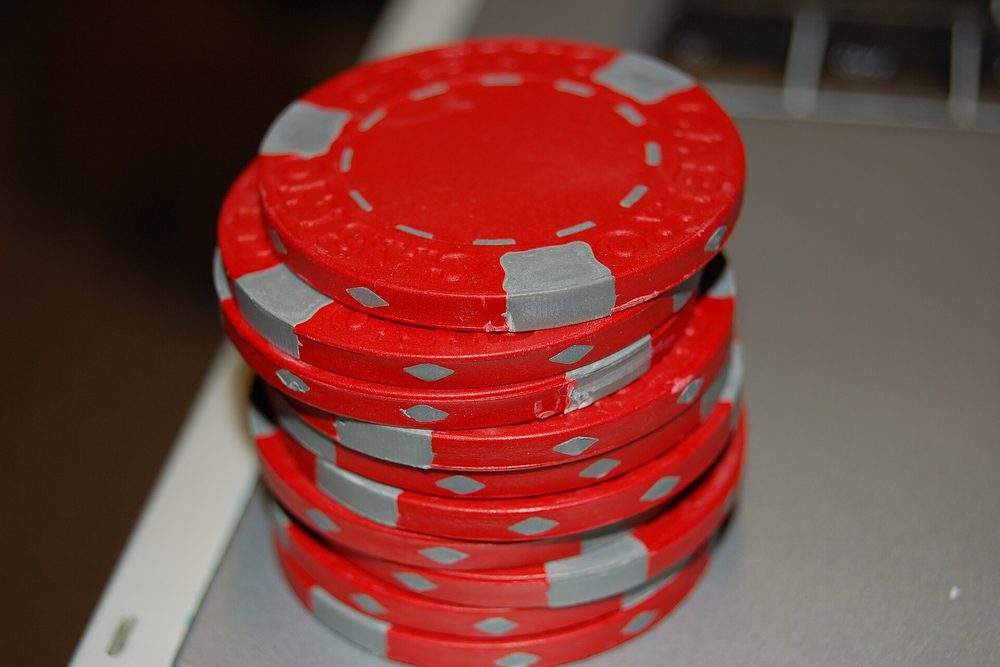
The scene repeated for years in every major tournament: a player calls for time, sinks into his chair, stares at his opponent, stares at his chips, stares back at his opponent. Two minutes pass. Five. The whole table waits in silence while one man decides whether to call a bluff. On television it played as drama; at the table it meant eight other players losing half an orbit of poker to a single hand. The community gave the phenomenon a name — tanking — and for a long time treated it as part of the game's folklore.
Then it stopped treating it that way. Today, much of the high-level live circuit runs on a shot clock: a visible timer giving each player a fixed number of seconds per decision, with extension chips for the hands that genuinely deserve more. The story of how poker went from "take all the time you need" to "you have thirty seconds" is also the story of how the game professionalized.
What it is and how it works
The typical format is simple: each player gets a fixed window to act when the action arrives — commonly around thirty seconds in normal stages, sometimes less at the highest levels. If the clock hits zero and you haven't acted, your hand is declared dead, or your pending action becomes a check where the rules allow it. You also receive a small stack of extension chips — three, five, depending on the event — each buying an extra block of seconds for genuinely hard spots. Managing them well is part of the game: burning extensions in the first hour on trivial decisions is a technical error, exactly like torching your online time bank.
Where it came from: tanking as a crisis
The push came from the high-roller scene of the mid-2010s. Those enormous-buy-in events concentrated the most studious players in the world, and with them a culture of endless deliberation: every meaningful river became a minutes-long production, partly from genuine calculation and partly as a weapon — slowing the table punishes opponents with less patience. Series at the Aria and later Triton began testing the clock, broadcasters embraced it instantly, and the European Poker Tour rolled it into its high-buy-in events. The argument that won was plain common sense: tournament poker is a game of rising blinds; time was already a game resource — it was just being distributed unfairly between the players who abused it and everyone else.
The shot clock didn't invent time pressure in poker: it distributed it evenly. The slow player used to steal minutes from the whole table; now everyone manages their own.
Online had it first (and nobody called it a revolution)
One detail the live-poker debate tends to forget: online poker has always run on a clock. Every site's time bank — those extra seconds that deplete and regenerate — is a shot clock by another name, and millions of players learned to decide under time without any drama at all. Part of the generation that pushed the clock onto the live circuit came precisely from there: to an online-trained player, half a minute for an average decision isn't an imposition, it's Tuesday. Live poker didn't adopt a new idea; it caught up to the one software had already enforced.
What it changes about how you play
- It rewards preparation: thirty seconds isn't enough to build a decision tree from scratch — it's enough to consult the one you brought. The clock moved work from the table to the study, pushing live poker toward online's culture.
- It shrinks timing information: when everyone acts inside a similar window, "he took forever, something's off" loses its edge as a read. Timing tells don't vanish, but they compress.
- It improves the recreational experience: more hands per hour means more poker for your buy-in. The complaint that the clock "rushes" amateurs doesn't survive an actual afternoon playing with one — the decisions a recreational player faces almost never need more than thirty seconds.
- It creates a new skill: extension management. Knowing which rivers deserve the extra chip and which don't is, in miniature, the same discipline as managing a bankroll or a stack.
The resistance, and what's left of it
Not everyone applauded. The serious argument against was always the same: elite poker lives in the details, and some decisions are legitimately too complex for any reasonable timer. That's true — and extension chips exist precisely for that minority of hands. The weak argument — that tanking is a right — lost decisively against the evidence that a few players were consuming everyone's time. The practical equilibrium is visible across today's circuit: clocks in high rollers and televised final tables, traditional pace with call-the-clock rules in most mass-field events, where the floor remains the referee of time.
For a Latin American player moving up from online games to a first big live event, the advice is simple: the clock is not your enemy, it's your home turf. You arrive trained by the time bank, used to deciding in seconds, while the purely live player still misses his long deliberations. It's one of the few online-to-live transitions where the advantage comes pre-installed.
If this is your lane, these go deeper: bankroll management and pot odds and equity. For more poker writing in English and Spanish, follow us on Facebook.