 EntrePoker
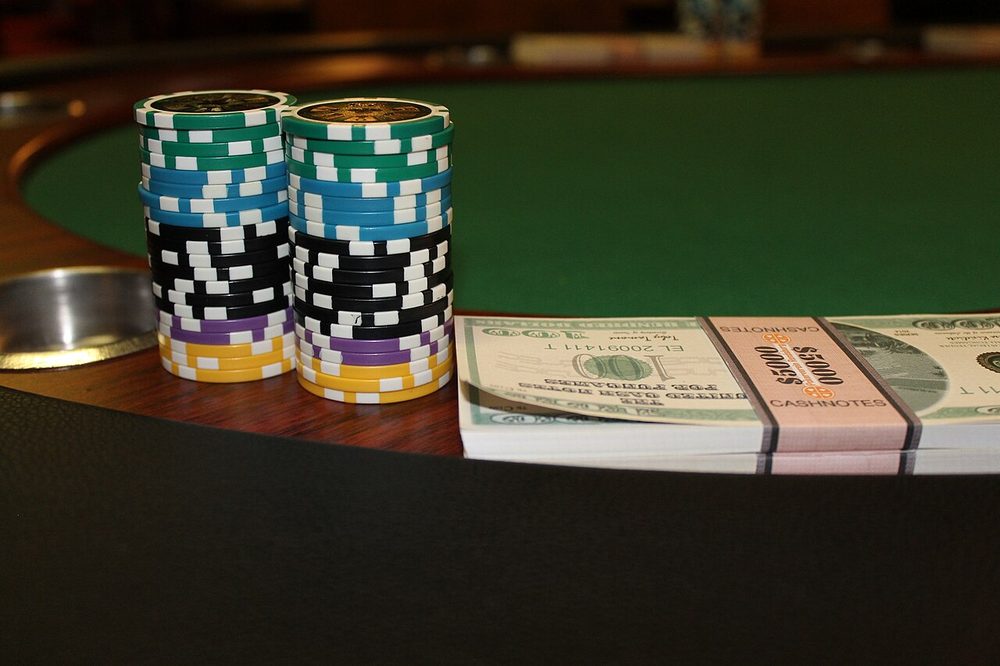
Every poker room has a version of the same pitch taped near the cashier: a photo of last year's winner, a trophy, a stack of cash arranged to look taller than it is. None of that is useful information. What's useful is arithmetic you can do before you sit down, and a short list of logistics that have nothing to do with hand ranges.
We get asked some version of "how do I prepare for my first live event" often enough that it's worth writing down plainly, without the marketing gloss. The honest answer has three parts: know what the buy-in actually costs you, know what the structure is actually telling you, and know what to do with your body and your hours so that the first part doesn't become a second problem.
Start with the number that matters: your buy-in as a share of your bankroll
A live tournament buy-in is not a fee you pay to play poker for an evening. It's money you should already consider gone, because tournament poker has high variance and most entrants in any given field do not cash. A field of 300 players typically pays somewhere around the top 10-15%, which means 85% or more of everyone in the room leaves having paid the buy-in and received nothing back.
This isn't pessimism, it's the shape of the format. A sensible rule that's circulated in poker rooms for decades is that a single tournament buy-in shouldn't be money you need for anything else — rent, bills, next week's groceries. If losing the buy-in would change your week in a way beyond mild disappointment, the buy-in is too large for where you are right now.
The buy-in is not a ticket to a prize. It's the full price of one evening of entertainment, paid in advance.
Read the structure sheet before you read anything else
Every tournament posts a structure sheet, usually near the registration desk or on a screen. It lists starting stack, blind levels, and level length in minutes. This single document tells you more about what kind of tournament you're entering than anything a promoter will say out loud.
A starting stack of 20,000 chips with 40-minute levels plays very differently from 10,000 chips with 15-minute levels, even if the buy-in is identical. The first gives you room to fold, observe, and let your edge show up over hours. The second compresses everything — you'll be making big decisions with a shallow stack much sooner than you'd expect from the buy-in price alone.
- Starting stack divided by the big blind tells you how many "big blinds deep" you begin — anything under 100 big blinds starting is a faster structure than it might appear
- Level length tells you how much thinking time the structure is built for, not just how fast blinds rise
- Late registration cutoff tells you how long the field keeps growing after the first hand is dealt
- Rebuy or re-entry rules, if any, change the real cost of entering — a tournament that allows one re-entry can effectively double your buy-in if you use it
Budget the clock, not just the money
A live tournament with a reasonable structure can run eight, ten, twelve hours before it's down to a final table, and a deep run can mean a second day. New players almost always underbudget time, not money. They plan for the buy-in and forget to plan for the day.
This matters for ordinary reasons: you need to eat something more substantial than the free snacks at the table, you need water within reach, and you need to have told whoever expects you home that the day has no fixed end time. Dehydration and low blood sugar make people play worse poker — not dramatically, but measurably, late in long sessions, and that has nothing to do with skill.
What to actually bring
- A government-issued photo ID — most casinos and card rooms will not let you register without one
- Cash or a card for the buy-in plus a separate, smaller amount for food and tips that you treat as already spent
- A layer of clothing you can add or remove — tournament rooms run cold by design, to keep players alert
- A watch or phone for tracking your own time, since table clocks aren't always visible from every seat
- Nothing that signals impatience: no work calls to take, no flight to catch that night if you're hoping to go deep
The etiquette nobody puts in the rulebook
Live poker has a soft code of conduct that experienced players follow without discussing it, and violating it marks you as new in a way that has nothing to do with your actual hand reading. Act in turn. Don't touch your cards once you've mucked. Keep your chips in visible, countable stacks instead of a single messy pile. If you're unsure of a rule, ask the dealer directly rather than asking the table — dealers are there to answer exactly these questions, and nobody will think less of you for asking.
Tipping dealers after a win is customary in most rooms but is not mandatory and not a rule of the game — don't let anyone pressure you into believing it's owed before any pot has actually been won. And if a hand goes to showdown, show your cards when asked; hiding them when you don't have to only slows the game down and irritates the table for no benefit.
What preparation cannot do
No amount of structure-reading or hydration planning changes the fundamental math of tournament poker: most people who enter a tournament do not finish in the money, and that's true of first-timers and former champions alike on any given day. Preparation doesn't buy you a result. It buys you a fair shot at playing your best across a long day, and it keeps the cost of a bad outcome contained to exactly what you decided in advance it would be.
That's the entire, unglamorous point of doing the arithmetic before you register: not to predict a result, but to make sure that whatever happens, it happened inside a budget and a day you set up on purpose.
If this is your lane, these go deeper: cash games vs tournaments and reading your opponents. For more poker writing in English and Spanish, follow us on Facebook.
EntrePoker has affiliate agreements with two rooms today: Americas Cardroom, on the WPN network, and WPT Global. Every other room we cover is a plain link to its own site.
Visit Americas Cardroom Visit WPT Global
18+ Affiliate links: if you sign up through them, EntrePoker may earn a commission at no extra cost to you. It does not change what we write. Full disclosure · Responsible gaming