 EntrePoker
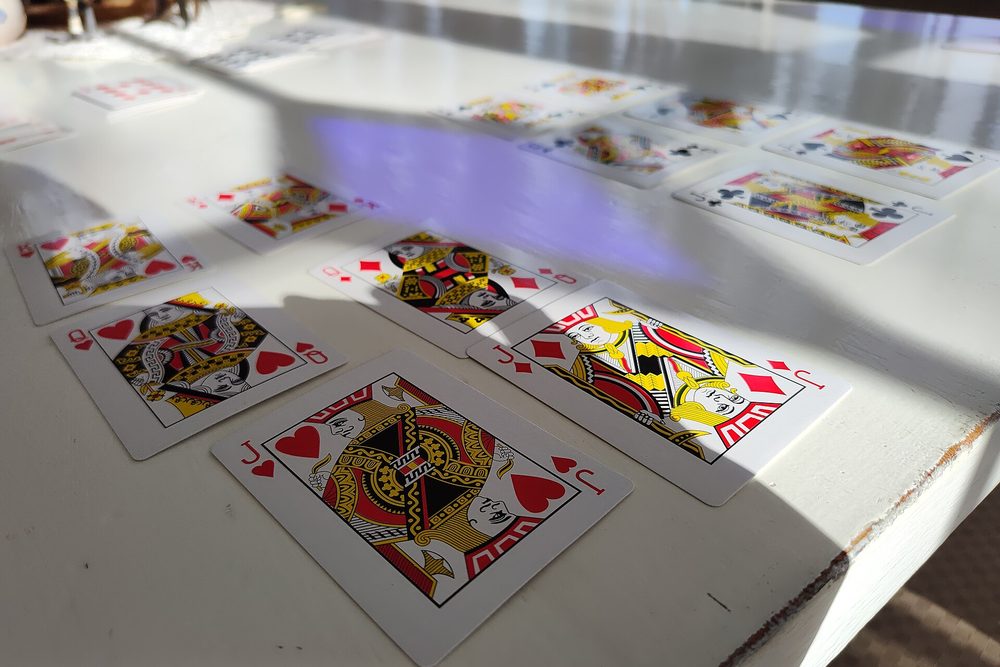
You reach the river with A-8 on a J-8-5-3-2 board. You bet for value earlier, your opponent called, and now they fire a pot-sized bet. Your hand beats a bluff and loses to any jack, any higher pocket pair and every set. You have to choose between calling and folding, and that is all the information you get.
That hand has a name: a bluff catcher. It only beats the opponent's bluffs. Against a value bet it always loses, so calling with it is a bet that your opponent is lying.
What a bluff catcher is and how it differs from a value hand
A value hand wants a call because it beats worse hands. A bluff catcher does not have that option: if the opponent holds a worse hand they will not bet it into you, and when they do bet it is almost always a better hand or a bluff. So the question changes. It is no longer whether your hand is good, but how many bluffs sit in the range the opponent bets with.
Middle pairs, second pairs with a decent kicker and some hands that showed strength earlier and never improved tend to land in this category on the river.
The math that tells you how often you need to win
Before you study the opponent, look at the price. When you call a river bet you put in one amount to win the pot plus the bet. The minimum equity for a call not to lose chips over time comes from dividing what you pay by the final pot.
- Pot of 100 and a bet of 100: you pay 100 to win 200. You need to win one time in three.
- Pot of 100 and a bet of 50: you pay 50 and the final pot is 200. You need to win one time in four.
- Pot of 100 and a bet of 200: you pay 200 to win 300. You need to win two times in five.
With a bluff catcher, winning means the opponent had a bluff. So against a pot-sized bet the opponent has to be bluffing at least a third of the time for the call to break even. The larger the bet, the more bluffs they need for the call to pay.
Questions that improve the decision
No rule is right every time, but four questions organize the decision and keep you from calling out of pride or folding out of fear.
- Which value hands can the opponent have, and how many combinations are there? If the line they took only makes sense with strong hands, there are few bluffs.
- Which bluffs can they have? Missed draws such as flush or open-ended straight draws are the usual source. If the board had no draws, there are fewer bluffs to find.
- What do you block? If you hold a card that keeps them from having strong hands, such as the ace of a suit that completed the draw or a key card for a set, there are more possible bluffs than it looks.
- How does this player behave? A passive player who suddenly bets big usually has what they show. An aggressive one who bets most rivers bluffs more often.
An example with numbers
You hold Q-J on a Q-8-4-7-2 board with no flush possible. You bet the flop and the turn, your opponent called, and now they bet half the pot on the river. You need to win one time in four. Your hand beats hands like A-8 or K-8 and straight draws that missed, such as 10-9. It loses to Q-K and Q-A. With a small bet the opponent can be betting thin value and bluffs, and at that price calling often makes sense against someone who does not bet only the strongest hands.
If the same bet were three times the pot, you would need close to half of their range to be bluffs, and that range almost never exists on the river without a clear story. Folding there is the correct decision, even if it stings.
Common mistakes with bluff catchers
- Calling because you do not want to be bluffed. An opponent who bluffs sometimes can still win money if you fold too much.
- Folding to every large bet. If you never call, the opponent can bluff with anything at no risk.
- Turning a single read into a rule. One bluff you saw does not change the opponent's range.
- Playing the bluff catcher like a strong hand on earlier streets. If you inflate the pot with a hand that only beats bluffs, the river leaves you without a comfortable exit.
How to practice this decision without pressure
The river with a medium hand is one of the spots where the gap between playing with a calculation and playing on a hunch shows most. A calm way to train it is to review your hands after the session and note three things for every river call or fold: the bet size, which value hands and bluffs the opponent could have, and what you blocked. After a few weeks of notes you will see whether you call too much or too little.
Do it at stakes that do not hurt. Poker involves the risk of losing money, a correct decision does not guarantee a win, and nobody should play with money they need to live on. If you notice you play to win back losses or every decision makes you anxious, set a time and money limit per session, or take a break. This article is educational and does not recommend any room or operator.
If this is your lane, these go deeper: reading your opponents and pot odds and equity. For more poker writing in English and Spanish, follow us on Facebook.
EntrePoker has affiliate agreements with two rooms today: Americas Cardroom, on the WPN network, and WPT Global. Every other room we cover is a plain link to its own site.
Visit Americas Cardroom Visit WPT Global
18+ Affiliate links: if you sign up through them, EntrePoker may earn a commission at no extra cost to you. It does not change what we write. Full disclosure · Responsible gaming