 EntrePoker
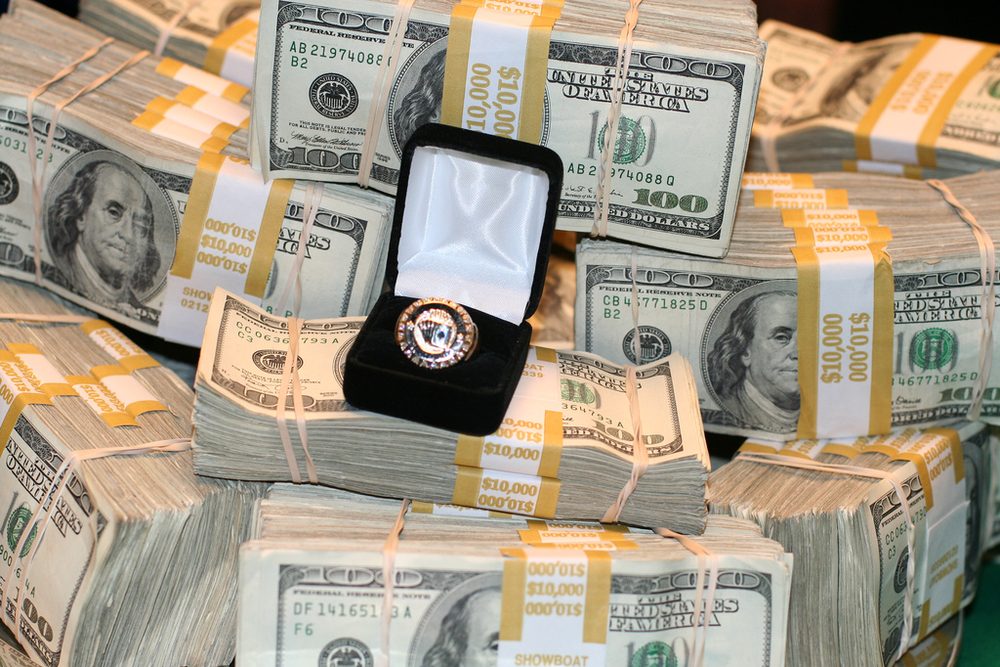
A World Series of Poker bracelet is, materially, not much: a strip of gold-plated metal, a scatter of stones, a nameplate engraved after the fact. Photographed under the lights of the Horseshoe or the Rio, it looks heavier than it is. Held in the hand, most winners say the opposite: it is lighter, and stranger, than they expected.
That gap between weight and meaning is worth sitting with, because the bracelet has spent more than five decades accumulating significance that has nothing to do with metal. It has stood for survival, for luck tempered by skill, and for a place in a lineage that includes names most poker players recognize without ever having met them: Moss, Brunson, Chan, Hellmuth, Ivey.
But the WSOP of 2026 is not the WSOP of 1976, or even of 2006. The number of events has multiplied, the geography has spread across continents and into browsers, and the word bracelet now covers so many different kinds of tournaments that the question of what it signifies is no longer rhetorical. It has an actual, complicated answer.
Where it began
Benny Binion did not invent the tournament format so much as borrow and formalize an existing culture of high-stakes cash games among Texas road gamblers who had drifted to Las Vegas. In 1970 he invited a small group of the best players he knew to his Horseshoe casino downtown and asked them to vote, among themselves, on who among them was best. Johnny Moss won that vote. There was no bracelet, no trophy in the physical sense - the prize was the standing itself.
The bracelet as an object did not appear until 1976, when the WSOP settled into something closer to its modern format: a genuine tournament with a start, a structure, and an eliminatory bracket rather than a poll. From that point on, the gold band became the shorthand for the achievement - portable proof, in a business built on stories that are hard to verify, that a specific claim was true on a specific day.
From seven events to a summer of ninety
For most of the 1970s and 1980s, the WSOP was a handful of events run over a couple of weeks, small enough that the same fifty or sixty names circulated through most of the final tables. The 2003 Main Event, won by an amateur named Chris Moneymaker who had qualified through a low-cost online satellite, changed the scale of the thing permanently. Fields that had numbered in the hundreds jumped toward the thousands within a few summers, and the number of side events grew alongside them to absorb the demand.
The WSOP now runs close to a hundred bracelet events across a single Las Vegas summer, spanning buy-ins from a few hundred dollars to six figures and formats from no-limit hold'em to mixed games that only a narrow slice of serious players will ever sit down to. It has also stopped being a Las Vegas-only institution: WSOP Europe has awarded bracelets since 2007, a Bahamas-based series added more in the 2020s, and bracelets have been awarded for online events since 2020 - a category that did not exist for the first fifty years of the Series.
- A single voted championship in 1970, with no physical prize.
- A handful of live events by the late 1970s, all in downtown Las Vegas.
- A Main Event field in the hundreds through the 1990s.
- A Main Event field reaching into the thousands after 2003.
- Close to a hundred bracelet events a year today, spread across live, online, and international series.
The inflation question
The obvious objection to all this growth is that a prize devalues as it multiplies. If ninety bracelets are handed out in a summer instead of seven, and some of those events draw a few hundred recreational entrants at modest buy-ins, then a bracelet from one of those fields is not doing the same work as a bracelet won by outlasting the largest, most competitive tournament in the game's history. Poker media and serious players say this plainly and often; it is not a fringe complaint.
The honest counterargument is that the market inside poker has already sorted this out informally, long before anyone needed to say it out loud. Players and commentators routinely distinguish between a bracelet earned in a small mixed-game event against forty seasoned specialists and one earned in a thousand-entry no-limit field with a softer distribution of skill. Both count, officially, as the same object. Almost no one inside the game treats them as the same accomplishment.
A bracelet from a $500 event and a bracelet from the Main Event are not the same currency, and everyone at the table knows it.
What still separates it
What survives the inflation argument is the format itself. A bracelet event, however small, still requires multiple days of live-elimination play against a field that cannot be bought out of variance. A cash game grinder can be consistently profitable over months without ever surviving three straight days of no-limit hold'em against a field of a thousand; a tournament, unlike a cash game, does not let skill smooth itself out over enough hands to reliably overcome bad timing. That short-run variance, which no amount of skill fully controls, is precisely what makes winning one, at any buy-in, a genuine outlier event rather than a predictable outcome.
The Main Event keeps a mythic status the other bracelets do not fully share, and this is not just marketing. Its final table is broadcast, its winner becomes for a year the public face of the game to people who have never played a hand, and the buy-in and field size still make it, structurally, the hardest single tournament in the calendar to win. Every other bracelet exists, to some degree, in relation to that one - proof of serious competence inside the game, where the Main Event functions as proof of something closer to a moment.
Beyond the felt
The bracelet's other life happens away from the tables, in the archive poker has been building of itself since the 1970s: photographs of Moss and Brunson, footage of Stu Ungar in the years before his early death, the induction plaques of the Poker Hall of Fame that Binion's family helped establish. A bracelet photographed on a winner's wrist becomes, almost immediately, part of that visual record - which is part of why players who will never spend the prize money treat the object itself with genuine care.
None of this changes the sober facts around the game. A bracelet is not evidence of a sustainable income, and the vast majority of entrants in any bracelet event, at any buy-in, will not win one; the format's variance cuts against the field as reliably as it produces a single winner. What the bracelet signifies is narrower, and we think more honest, than the industry sometimes lets it sound: a specific, verifiable, hard-to-repeat feat of survival inside a fair structure, on a particular day, against players who all wanted the same thing.
Fifty-six years after Johnny Moss won a vote instead of a tournament, the object itself has changed more than the thing it represents. There are more bracelets now, and they mean less in aggregate and just as much individually as they ever did - the trick, for anyone watching the Series from outside, is learning to tell the two apart.
If this is your lane, these go deeper: cash games vs tournaments and pot odds and equity. For more poker writing in English and Spanish, follow us on Facebook.