 EntrePoker
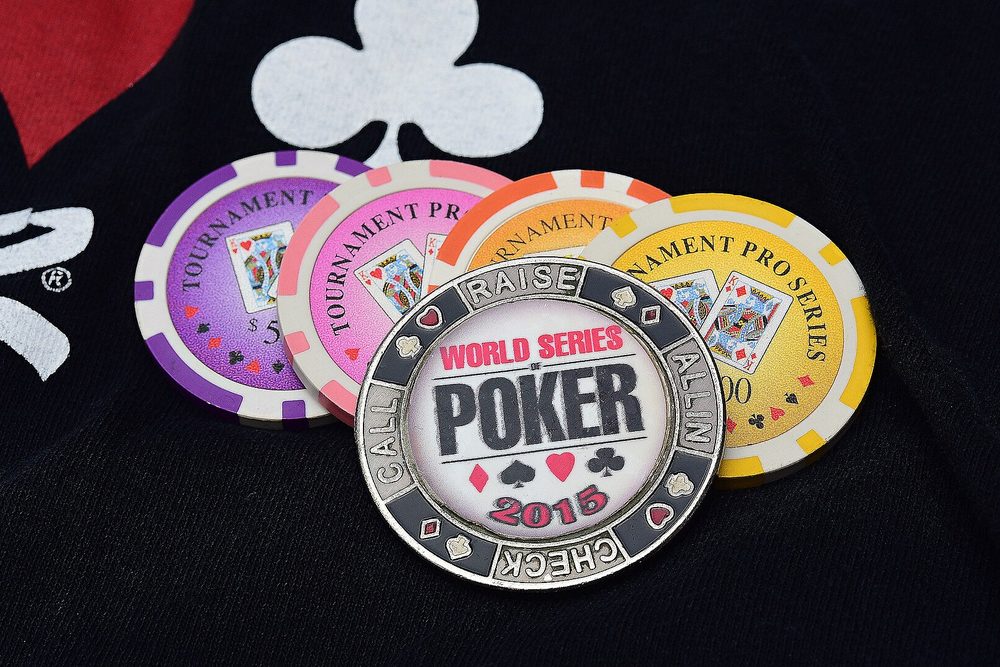
The World Series of Poker has awarded bracelets since the 1970s, and for most of that history the object was inseparable from a room. Bright lights, a dealer across the felt, a rail of strangers who could watch your hands shake at the final table. The bracelet meant something because everyone agreed on what it took to win one: you sat down, in person, against people who could see you, for as many days as it took.
Online poker entered the WSOP's orbit long before it entered the bracelet itself. Chris Moneymaker's 2003 Main Event win, after qualifying through a modest online satellite, is often cited as the moment online poker and the WSOP became permanently linked in the public imagination. But that link ran through a physical event. The internet fed players into Las Vegas; it did not yet decide who left with gold.
That changed gradually after 2015 and decisively after 2020. What began as a regulatory footnote became, almost overnight, the mechanism that kept the WSOP alive during a pandemic and, later, a permanent second track running alongside the live series. The bracelet did not disappear online. It multiplied there, and the poker world has spent the years since arguing about what that multiplication is worth.
From feeder to venue
In 2015, WSOP.com launched a shared online network across Nevada and New Jersey, the first two states with regulated online poker large enough to support a real tournament series. That platform hosted the first online bracelet events in WSOP history, small by Las Vegas standards, largely ignored outside the regulated-poker press, and treated by most of the industry as a curiosity rather than a shift.
For roughly five years, online bracelets stayed exactly that: a Nevada and New Jersey sideshow, constrained by which states had legalized online poker at all and by the modest liquidity those markets could produce. The live summer series in Las Vegas remained, unquestionably, the center of gravity.
2020: the year the field went digital
The pandemic forced something the WSOP had never had to consider: a summer with no gathering in Las Vegas. Rather than cancel the series outright, the WSOP struck a partnership with GGPoker to run bracelet events for players outside the United States, while WSOP.com ran a parallel domestic series across the states where regulated online poker existed. Between the two platforms, the bulk of that year's bracelets were won by players who never left their homes.
It is worth sitting with what that meant. A trophy built on the idea of surviving a room proved, in 2020, that it could be won and still hold its value without one. There was no rail, no photographers, no chanting of a name across a tournament floor. There was a login, a long stretch of hands, and eventually a bracelet mailed or handed over at a later live event. The object survived contact with an entirely different kind of proof.
The hybrid architecture that stuck
When the live series returned to Las Vegas, delayed into the fall of 2021 by the lingering pandemic calendar, the online track did not fold back into obscurity. It became permanent. Since then the WSOP has run three parallel structures each year rather than one.
- The live summer series in Las Vegas, still the largest single gathering and still the source of most bracelets awarded in a given year
- A GGPoker-operated WSOP Online series for players outside the United States, run on its own schedule and awarding its own bracelets
- A WSOP.com online series across regulated U.S. states, functioning as a separate domestic track with its own bracelet events
A further wrinkle deepened the debate: some events now run their early stages entirely online, over days or weeks, and fly the surviving field to Las Vegas for a live final table. These hybrid events are neither fully online nor fully live. They are a deliberate splice of both, built specifically to answer the criticism that an all-online bracelet skips the part of poker people actually watch.
The case against
The objection from poker's traditionalists is not really about fairness in the strict sense. It is about what a bracelet is supposed to certify. A live tournament asks a player to survive fatigue, physical tells, and days of sustained attention in a room full of witnesses. Online play removes almost all of that. Critics also point to the harder practical problem of policing multi-accounting and collusion across a screen, even with the identity verification and geolocation checks that regulated platforms are required to run in every licensed state.
A bracelet was supposed to prove you could survive a room, not a router.
There is also a quieter, more cultural version of the objection: a bracelet won from a couch simply does not photograph, or feel, the way one won under lights in Las Vegas does, and a fair amount of that gap is about ritual rather than difficulty.
The case for
The strongest argument on the other side is a numbers argument. Online bracelet events, freed from the cost and logistics of travel, frequently draw larger fields than modest live events on the same calendar. Surviving a field of several thousand entrants scattered across a continent is not an obviously softer test than surviving a smaller live field in a single room, and in raw field size the online events sometimes make the harder claim, not the easier one.
There is also a plainer point about who actually plays tournament poker in 2025. A large share of competitive volume in the game now happens online, and a trophy that refuses to acknowledge that is a trophy increasingly disconnected from the game it is meant to represent. None of this settles the debate. It just explains why it has not gone away.
The WSOP has not resolved the tension so much as institutionalized it, running live, GGPoker-international, and WSOP.com-domestic bracelets side by side without ranking one above the others in any official sense. The poker world ranks them anyway, informally, in commentary and in the private hierarchies players build for themselves. That informal ranking, more than any rule change, is where the real debate lives, and it is unlikely to be settled while the game itself keeps moving between the felt and the screen.
If this is your lane, these go deeper: why position wins pots and pot odds and equity. For more poker writing in English and Spanish, follow us on Facebook.