 EntrePoker
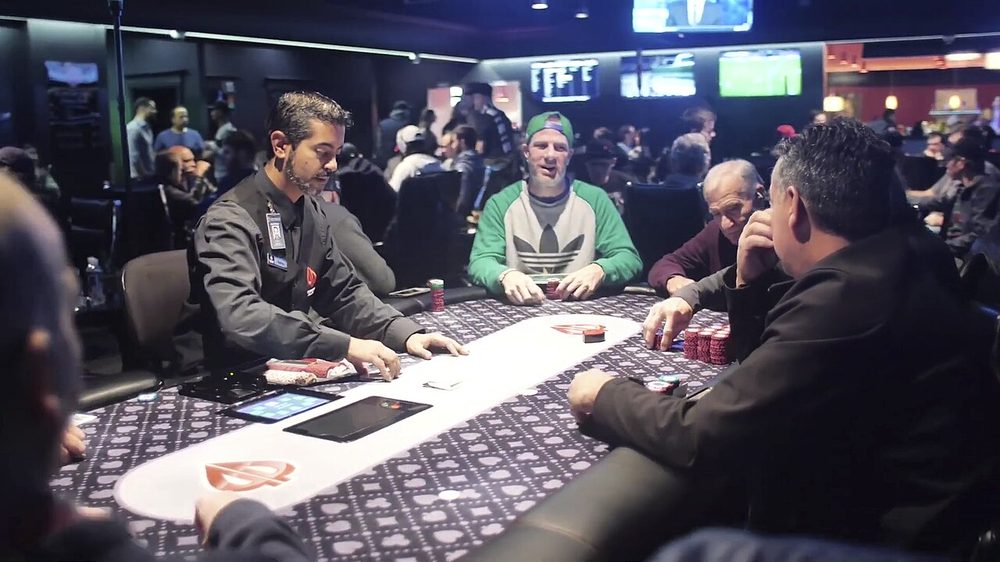
A staking deal is a contract before it is anything else. One party puts up the money for a player to enter a tournament or sit in a cash game; the other party puts up the time, the seat and the skill. Whatever romance exists around the practice, in backing circles and in the stories that get told about them, the deal itself is arithmetic: who pays for the buy-in, who keeps what percentage of the result, and who absorbs the loss when there is one. Losses are the normal outcome of most sessions. That has to be stated plainly before anything else, because the staking world has a habit of talking about the upside and leaving the downside to the fine print.
The practice is old. Backing arrangements existed in card rooms long before online poker gave them a name and a spreadsheet. What has changed since the 2000s is scale and formality: staking now runs through written contracts, tracked percentages and, in some cases, pooled ownership of a player's action sold in pieces to several backers at once. The vocabulary got more precise. The underlying math did not change.
The basic shapes a deal can take
Most staking arrangements are variations on a small number of templates. The differences between them are about where the risk sits and how the split is calculated once a result exists.
- Full backing: the backer pays 100% of the buy-in and the player keeps a negotiated share of profit, the exact share depending on the player's track record and the backer's leverage.
- Makeup-based backing: the same split, but any losses are carried forward as a debt (the "makeup") that the player must earn back from future profit before new winnings are split again.
- Staked percentage sales: a player sells a portion of their own buy-in, say 20%, to one or several backers at a fixed price, often at a markup above face value, and keeps the rest of the action themselves.
- Swaps: two or more players each take a small percentage of one another's action in the same event, usually to diversify variance rather than to raise capital.
Markup deserves its own mention because it is where a lot of the real argument sits. If a player sells 10% of their action in a tournament with a $5,000 buy-in at 1.1 markup, the backer pays $550 for that 10% stake instead of the $500 face value. The extra $50 is the fee for believing the player is worth more than the cost of entry. Markup above 1.0 is normal for players with a strong public record; markup at or below 1.0 is common for newer or less proven players, and sometimes for favors among friends.
Makeup is where good intentions get complicated
Makeup is the single most misunderstood part of backing. It sounds simple: losses carry forward, future wins pay them down first. In practice it can trap a player in a debt that grows faster than it shrinks, especially in tournament poker, where most buy-ins return nothing and variance is wide even for a player with a real statistical edge.
Consider a player staked for ten $1,000 buy-ins who cashes in only one of them, for $4,000, with a 50/50 split after makeup is cleared. The backer is out $10,000 in buy-ins. The $4,000 cash first pays down that $10,000 of makeup; nothing is split yet, and the player has made no money from the arrangement despite winning a tournament. The player now carries $6,000 of makeup into the next stake. This is not a hidden trick. It is how makeup works by design, and it is disclosed in any serious contract. It is also why experienced players negotiate makeup forgiveness clauses, partial makeup resets, or caps on how much debt can accumulate before the deal is renegotiated or ended.
Markup is the price of belief in a player; makeup is the price of being wrong about them, paid by the player, in the future.
Who backs whom, and why
Backers range from wealthy individuals looking for a diversified bet on a player they know personally, to syndicates that pool money across several players and events, to staking groups that function almost like small investment funds with formal reporting. In the online era, staking also moved into semi-public marketplaces where backers bid on pieces of a player's action for a specific tournament series, with reputation systems substituting for personal trust.
Reputation is the real collateral in this business, since there is rarely a legal mechanism that forces a player abroad, in a different country from the backer, to honor a losing makeup balance or a backer to pay out a win on time. Staking communities police this with public records of who has paid and who has not, and a player or backer with a bad name in that record generally stops getting deals. This is closer to how reputation worked in pre-banking merchant trade than to anything in modern consumer finance, and it is a real risk for both sides that has nothing to do with the cards.
What the deal does not promise
No backing arrangement changes the base rate of poker. Most buy-ins, staked or not, do not cash. A backer spreading action across many players and events is running something closer to a portfolio than a bet on a single outcome, and even a well-run portfolio of tournament stakes can post a losing year. Staking does not convert a volatile game into a steady income for the player, and it does not convert a backer's capital into a safe, predictable return. It redistributes variance between two parties who have agreed, in writing, how that redistribution works.
The honest way to describe a stake is as a bet the backer places on a person, structured so the person has an incentive to play well and the backer has some protection against total loss. It is not a loan, because the player typically owes nothing out of pocket if the stake loses. It is not an investment in the conventional sense, because there is no underlying asset, only a human being with a given set of skills on a given day.
Reading a deal before signing it
A staking contract, even an informal one between friends, should answer a short list of questions clearly enough that neither party has to guess later.
- What exact percentage of the action does each party hold, and across which specific events or time period does the deal apply?
- Is there markup, and if so, what is it, and was it agreed before or after results were known?
- Does makeup apply, does it carry forward indefinitely, and is there any cap, reset, or forgiveness clause?
- Who decides which events the player enters, and can the player decline an event the backer wants them to play?
- How quickly after a cash does the backer get paid, and through what method?
Deals that leave any of these vague tend to produce disputes, and disputes in staking rarely have a court to settle them. The clarity of the paperwork matters more than the size of the buy-in.
Staking will keep existing because poker's variance makes it a rational tool for both sides when the numbers are honest and both parties understand that most of the money moving in this market moves from backer to player, buy-in after buy-in, with no cash at the end of it.
If this is your lane, these go deeper: pot odds and equity and cash games vs tournaments. For more poker writing in English and Spanish, follow us on Facebook.
EntrePoker has affiliate agreements with two rooms today: Americas Cardroom, on the WPN network, and WPT Global. Every other room we cover is a plain link to its own site.
Visit Americas Cardroom Visit WPT Global
18+ Affiliate links: if you sign up through them, EntrePoker may earn a commission at no extra cost to you. It does not change what we write. Full disclosure · Responsible gaming