 EntrePoker
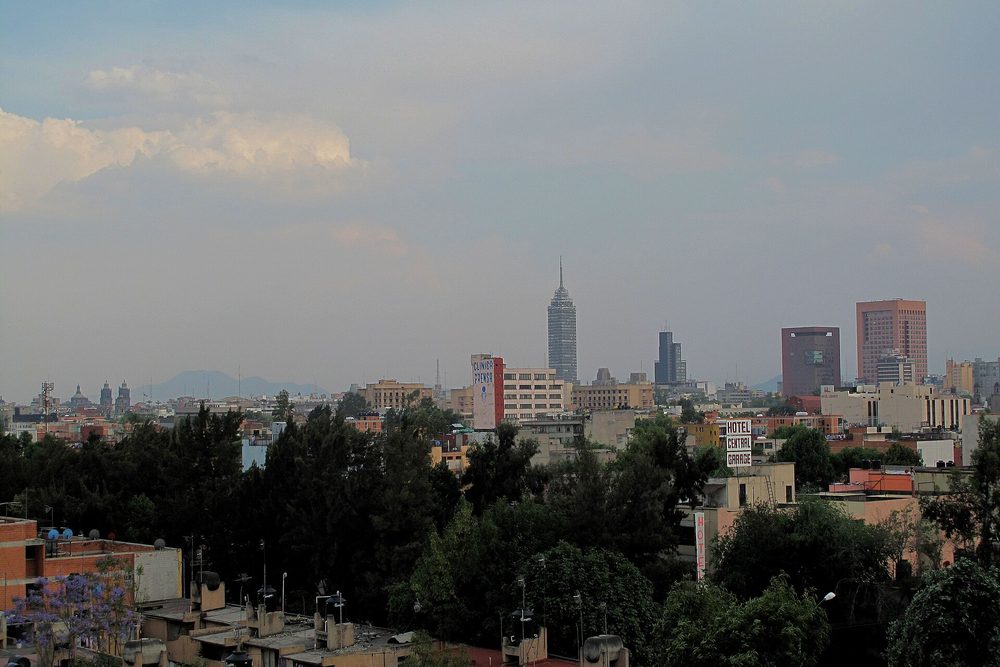
Ten years ago, a poker room in Mexico City on a Tuesday night looked like a poker room in most of Latin America: a handful of low-stakes tables, a dealer who also ran the cash cage, and a crowd that skewed heavily toward men over forty. Walk into the same rooms today, in Polanco or Santa Fe, and the picture has changed. The tables fill earlier, the average age has dropped, and the players trading chips are as likely to have learned the game from a stream as from an uncle.
That shift is not anecdotal. Across live series, casino floors and online traffic, Mexico has emerged as the most dynamic poker market in Latin America over the past several years, outpacing longtime regional anchors like Argentina and Colombia in the rate, if not yet the scale, of its growth. Nothing here suggests poker as a source of income or a way out of financial trouble — it remains, first and foremost, entertainment with real risk attached. But as an industry and cultural phenomenon, Mexico's trajectory is worth understanding on its own terms.
The reasons are less about the cards and more about the country underneath them: a young, urban, increasingly banked population, a gaming law old enough to have outlived several political eras, and a payments infrastructure that finally caught up with the internet.
The demographic engine
Mexico is home to roughly 130 million people, making it the largest Spanish-speaking country in the world, and its median age sits well below that of the United States or most of Western Europe. A large share of that population lives in dense metropolitan areas — Mexico City, Guadalajara, Monterrey — where casinos, gaming lounges and, by extension, poker rooms are concentrated.
That combination matters because poker's traditional markets are aging. In much of the United States and Europe, the generation that came up during the 2003-2006 poker boom is now in its forties and fifties, and rooms in those countries have struggled to replace them at the same rate. Mexico, by contrast, has a steady supply of players entering their twenties every year, many of whom encountered poker not at a casino but on a phone screen, through streamed final tables or short clips long before they ever sat at a felt table.
A gaming market built on an old law
Mexico's gambling framework traces back to the Ley Federal de Juegos y Sorteos, a federal statute dating to 1947 that, on paper, still governs most gaming activity in the country. For decades it produced a narrow, cautious market. That changed with a regulatory update issued in 2004, which opened the door to a new generation of casinos and gaming halls operating under permits originally built for bingo and remote betting.
Poker itself was never singled out as its own regulated category. Instead, poker rooms grew as an ancillary product inside casinos licensed for other purposes — which is precisely why operators like Grupo Caliente and Big Bola built out card rooms alongside their sportsbooks and slot floors rather than opening dedicated poker halls. The result is a market that expanded quietly, city by city, without the kind of single legalizing moment that reshaped poker in, say, parts of the United States after 2010.
The live circuit finds a home
For much of the 2010s, the clearest signal of Mexico's growing relevance was its recurring role as a stop on the Latin American Poker Tour, the regional circuit that brought international players and dealers into Mexico City on a semi-regular basis. Those events did more than fill hotel rooms; they trained a generation of local tournament directors, floor staff and dealers who later went on to run domestic series with the same production standards as the international ones.
That local capacity is now visible outside the capital. Series that would once have been confined to Mexico City are turning up in Cancún, Monterrey, Guadalajara and along the Pacific coast, tied to tourism calendars as much as to the game itself.
- A young, urban population concentrated in a handful of metro areas
- Casino floors that folded poker into existing bingo and betting licenses rather than banning or ignoring it
- A decade of international tour stops that trained local staff and built an audience
- Regional series expanding beyond Mexico City into Cancún, Monterrey and Guadalajara
- Mobile-first payment habits that lowered the friction of getting into a game
Payment rails made online poker possible
None of this growth would have translated online without a change that had nothing to do with cards: Mexico's payment infrastructure caught up with its internet penetration. A large share of Mexicans still operate largely in cash, but the last decade has seen rapid growth in SPEI, the country's real-time interbank transfer system, and in cash-based deposit networks built around convenience stores like OXXO, which let someone without a credit card fund an account with cash at a corner store.
A decade earlier, that same person — young, urban, comfortable with a smartphone but without a bank card — was effectively locked out of any digital gaming platform. That friction is largely gone now, and it is one of the least discussed but most important reasons Mexico's poker audience looks different, and younger, than it did in 2015.
Mexico's poker growth was built less on a single law than on a generation that finally had a way to pay for what it already wanted to play.
What the growth does not mean
It is worth being precise about what 'fastest-growing' means here, because it is easy to overstate. Mexico's poker market remains modest next to the United States, and even within Latin America it sits alongside, rather than clearly above, established scenes in Argentina and Colombia in terms of total size. What has changed is the rate of expansion and the visibility of the game in daily life, not its position as a mass mainstream pastime.
It is also worth restating something this publication returns to often: poker, in Mexico or anywhere else, is not a plan for income and should never be treated as one. The growth described here is a story about culture, infrastructure and demographics — not a signal that the game has become a reliable way to make money. Real money is at stake at these tables, and the same sobriety that applies to any form of gambling applies here.
The regulatory picture, too, remains unsettled in places. A 1947 law updated piecemeal since 2004 was never designed with online poker or mobile payments in mind, and operators continue to work within permits built for other kinds of gaming. That ambiguity has not slowed growth, but it does mean the market's shape could still shift as regulators catch up with what is already happening on the ground.
What is not in question is the direction. A young population, a payments system that finally works for how people actually bank, and a decade of live events that trained a domestic industry have combined to make Mexico the region's most closely watched poker market — not its largest yet, but its most clearly moving one.
If this is your lane, these go deeper: bankroll management and pot odds and equity. For more poker writing in English and Spanish, follow us on Facebook.
The room EntrePoker has an affiliate agreement with today is Americas Cardroom, on the WPN network. Every other room we cover is a plain link to its own site.
18+ Affiliate link: if you sign up through it, EntrePoker may earn a commission at no extra cost to you. It does not change what we write. Full disclosure · Responsible gaming