 EntrePoker
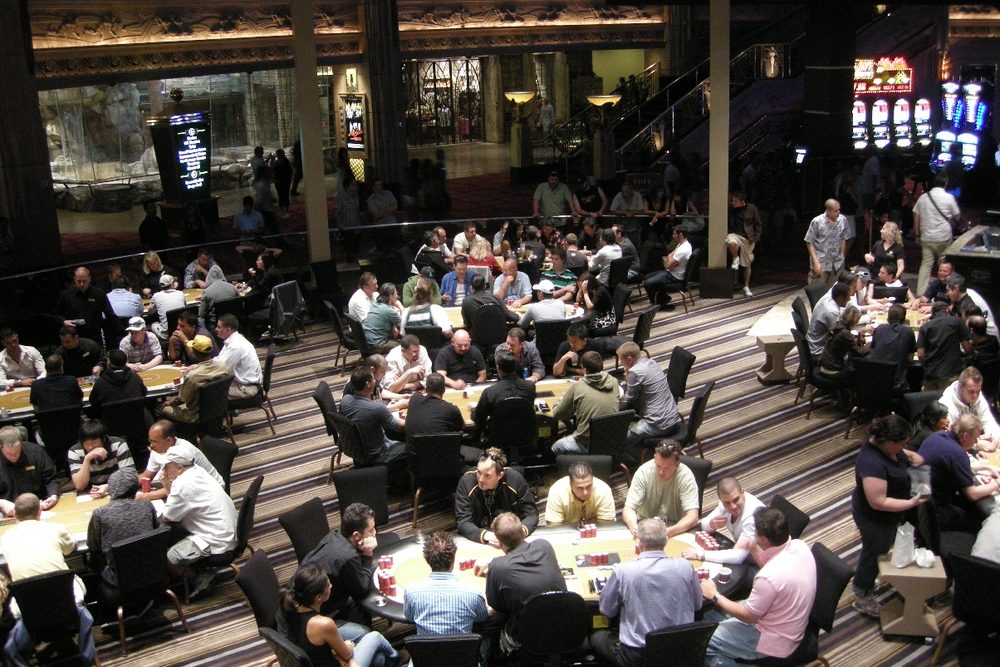
Walk into almost any large casino and you will notice something odd if you look at it with a cold eye: the poker room is usually tucked into a corner, often with worse lighting, slower service, and less square footage per dollar of revenue than anything else on the floor. Pit bosses love to talk about table games. Slot managers obsess over hold percentages. Poker rooms, by contrast, tend to get discussed in a different register entirely — as a cost center, a traffic generator, a thing you keep around because of what it does for the rest of the building, not because of what it earns on its own.
This is not a secret exactly. Anyone who has worked casino operations for more than a year has heard a version of it. But it is rarely said out loud in press releases or annual reports, because it complicates the story casinos like to tell about poker — that it is a prestige game, a signature attraction, something that puts the brand on ESPN during a televised final table. The quieter truth is more mundane and, we think, more interesting.
What a loss leader actually means here
In retail, a loss leader is a product sold at or below cost to pull customers through the door, with the expectation that they will buy higher-margin items once inside. Milk and bread near the entrance of a supermarket work this way. Casino poker rooms occupy a similar structural position, though the mechanics differ because poker, unlike blackjack or slots, is not a game the house plays against the player.
In poker, the casino's revenue comes almost entirely from the rake — a percentage taken from each pot, or a time charge collected per half-hour of play — not from beating anyone at the table. That rake is capped, usually modestly, and it has to cover dealers, floor staff, chips, tables, and the real estate itself. Compare that to a blackjack pit or a bank of slot machines, where the house has a structural mathematical edge on every hand or every spin, with far lower labor cost per dollar wagered. The arithmetic is not close.
A poker room rarely pays for itself; it pays for the building around it.
Why the room survives anyway
If poker rooms are such weak earners, why do so many casinos keep them? The honest answer has several parts, and none of them involve sentimentality about the game itself.
- Poker players tend to stay on property for long sessions — six, eight, sometimes ten hours — and long sessions mean meals, drinks, hotel nights, and parking revenue elsewhere in the building.
- A live poker room gives a casino a reason to run promotions, tournaments and series that generate marketing content, media coverage, and mailing-list sign-ups the casino can use for its whole database, not just poker players.
- Dedicated poker players are a recognizable, loyal demographic that casino marketing departments can court with comps, room discounts and tournament buy-in credits — tools that steer behavior toward the rest of the property.
- A poker room signals to a certain kind of visitor — often an older, more affluent or more game-literate customer — that the casino takes gaming seriously, which has brand value even when the room's own ledger is unremarkable.
Put together, these are the reasons a 24-table poker room on the Las Vegas Strip or in a regional casino in Mexico City or Bogotá might run near breakeven, or occasionally at a modest loss, year after year, without anyone seriously proposing to shut it down. It is not charity. It is customer acquisition cost, dressed up as a game.
The online complication
This calculus has shifted since the 2000s, when online poker sites — paying no rent, no dealers, running thousands of tables simultaneously — demonstrated that poker rake alone, at scale and with minimal fixed cost, could be genuinely profitable. That gap between the lean economics of a server farm and the heavy fixed costs of a physical room is one reason so many brick-and-mortar casinos in the U.S., across Europe, and increasingly in Latin American jurisdictions with regulated online markets have pushed hard into hybrid models: a live room that functions partly as a brand ambassador for an online product where the real margin lives.
In markets like Colombia, where online poker operates under a licensing regime, or in Mexico, where the regulatory picture is more fragmented across states, we have watched casino groups treat their physical poker rooms less as standalone businesses and more as a kind of permanent advertisement — a place to film content, run live qualifiers, and put a face on an otherwise invisible online operation. The room becomes theater for a different, more efficient revenue stream happening elsewhere.
What this means for the player
None of this should make a player feel exploited, exactly, but it is worth understanding clearly, because it explains a lot of lived experience at the tables. It explains why poker rooms get the worst real estate in a renovation. It explains why dealer-to-table ratios get squeezed during slow hours, why tournament structures sometimes favor speed over play quality, and why a room will happily run a loose promotional giveaway if it believes the giveaway will pull warm bodies onto the casino floor afterward.
It also explains something structural about the game itself that is easy to forget: because the house is not betting against you in poker, the casino's incentive is volume and duration, not your individual result. That is different from slots or table games, where the house's edge means your losses are, in aggregate and over time, close to mathematically guaranteed. Poker's risk is real — money lost at a poker table is gone just as permanently as money lost anywhere else in a casino — but the structural relationship between player and house is not the same, and understanding that difference is useful context, not a reason for false comfort.
A fairer way to read the room
We think the honest framing is this: a casino poker room is less a profit center than a piece of infrastructure, closer in function to a nice lobby or a well-lit parking garage than to a slot floor. It exists because it makes the rest of the building work better, not because the game is lucrative on its own terms. That is not a scandal. It is simply how the economics of a modern casino are built, and it is worth saying plainly instead of leaving it as an open secret traded between old floor managers and tournament directors.
The game itself — the skill element, the social texture, the history running back through Texas road gamblers and Nevada card rooms to the televised boom of the early 2000s — is real and worth taking seriously on its own terms. But the room it is played in, inside a casino, was never built around poker's interests. It was built around the casino's, and poker has always had to make its peace with that arrangement.
If this is your lane, these go deeper: bankroll management and why position wins pots. For more poker writing in English and Spanish, follow us on Facebook.