 EntrePoker
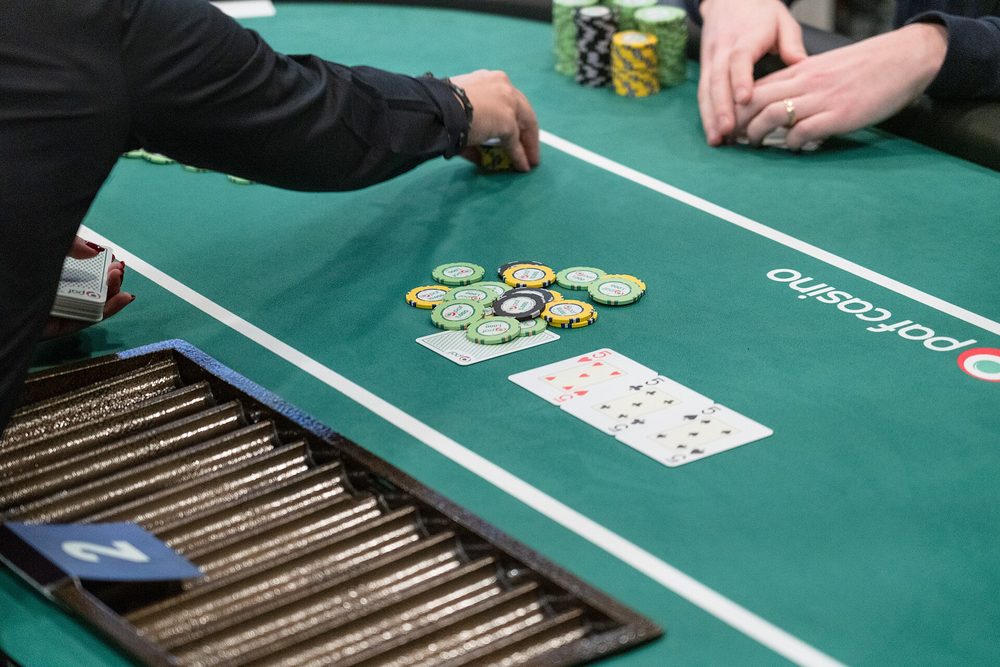
Every few years a documentary or a magazine profile resurrects the same image: a young player with a laptop open to four tables, grinding from a rented apartment in a city chosen for its tax code rather than its charm. The implication is that this is replicable, that the path from casual player to professional is mostly a matter of discipline and volume. It is not. The economics of poker are closer to the economics of music or fiction writing than to the economics of a trade: a visible, well-covered minority earns real money, and a much larger group loses, breaks even, or earns so little that calling it income misstates what is happening.
We say this as a publication that loves the game, not as one trying to talk anyone out of playing it. Poker is a skill game layered on top of a gambling structure, and that combination makes it unusually easy to misjudge your own results. A few good months feel like proof of a system. A few bad ones feel like bad luck. Separating the two requires sample sizes that most players never reach, and record-keeping habits that most players never form.
The rake is the real opponent
Every poker format, cash games, tournaments, and mixed games alike, routes a cut of each pot or each buy-in to the house. That cut, the rake, is how casinos, cardrooms and online operators fund the game and make a profit on it. It is not a conspiracy and it is not hidden. It is simply the fixed cost of playing, and it means the game is not zero-sum among players. It is negative-sum before anyone's skill enters the picture.
In a cash game, rake is typically taken as a percentage of the pot up to a cap. In a tournament, it is built into the buy-in as a fee on top of the prize-pool contribution. Either way, the player pool as a whole must lose a predictable amount to the house over time, which means the pool of winning players must be smaller, and win by more, than casual intuition suggests. If ten players each put in equal money over a year, the house takes its share first, and only then do players divide what is left among themselves, unevenly.
Who the winners actually are
The players who show a durable, long-run profit in poker share a few traits that rarely make it into the glamorous version of the story. They have logged large volumes of hands or tournaments before they trust their own numbers. They play fewer sessions on tilt, meaning fewer decisions made from frustration or fatigue rather than analysis. And overwhelmingly, they treat the activity with the discipline of a part-time undertaking with real costs, not a lifestyle funded by the game itself.
- They track results across sessions, not just memory of big wins
- They separate a bankroll meant for play from money meant for rent, food or savings
- They accept variance over months or years, not days
- They treat study time, hand review and bankroll rules as the actual work, not the hands themselves
Even among this disciplined minority, year-to-year results swing. A player with a genuine, provable long-term edge can still have a losing year, because variance in poker operates on a scale that a single calendar year often cannot smooth out. Anyone presenting a winning year as proof of skill, or a losing one as proof of failure, is reading too much into too little data.
Why most players lose or break even
Rake guarantees that the player pool as a whole cannot come out ahead against the house, and within that pool results are not spread evenly. A relatively small group of disciplined, skilled players accounts for most of the durable winnings, a large middle group hovers near break-even before costs, and a meaningful share of players lose over time. The exact proportions shift by stake level, game format and time period, and we won't attach a false precision to a single number here. The shape, not the decimal point, is the lesson.
Rake explains part of this. Skill gaps explain the rest. Poker rewards a specific set of abilities: reading bet sizing and timing, calculating pot odds quickly, managing emotional response to loss, and making the same correct decision the hundredth time as the first. These are learnable, but they take deliberate study and repetition that most recreational players never put in, because most recreational players are not trying to build a skill. They are spending an evening.
The gap between a hobby and an income is not talent. It is the rake, the sample size, and the discipline to track both honestly.
Tournaments distort the picture further
Televised and streamed tournament poker, especially the World Series of Poker Main Event and its seven-figure first prizes, has shaped the public image of the game more than any other format. But tournaments are the highest-variance corner of poker. A large field pays meaningfully only to a fraction of its entrants, and the first-place prize dwarfs the money finishing just outside the payouts. A player can be clearly among the most skilled in a field and still not cash in a given event, simply because a single elimination ends the tournament regardless of how many correct decisions preceded it.
This is why serious tournament players who try to earn consistently from the format typically rely on arrangements that spread risk: selling pieces of their buy-in to other players, swapping percentages with peers entering the same event, or playing a very high volume of smaller buy-ins rather than chasing one large field. These are risk-management tools, not loopholes, and they exist precisely because tournament variance is too large for an individual's bankroll to absorb alone over a short run.
The costs nobody photographs
The income side of poker gets attention. The cost side rarely does. A player who travels to tournament stops pays for flights, hotels and meals regardless of result. A player who grinds online pays for software subscriptions, data, and often coaching. Health insurance, retirement savings, and the ordinary financial stability that a salaried job provides automatically are all things a poker player has to build manually, with money that has to come from somewhere other than a guaranteed paycheck.
There is also the cost of time spent in a state of uncertainty that most employment does not require. A losing month in a job with a fixed salary is simply a month. A losing month at the tables, even a month that is statistically normal given a player's actual edge, can feel like evidence that something is wrong, and that feeling has a cost of its own, in stress and in decisions made to chase a result rather than play correctly.
What this means for someone who plays
None of this is an argument against playing poker. It is an argument against treating it as a plan. The healthiest way to think about the game, by the evidence of how it actually pays out across large populations of players, is as a serious hobby with real skill content and real cost, similar in structure to competitive golf or chess at a club level rather than similar to a profession with a predictable salary.
Set a bankroll you have already decided you can afford to lose entirely, separate from money earmarked for anything else. Track results honestly across a long enough stretch that a few good or bad sessions cannot distort the picture. And measure the time spent against what that time is worth to you in enjoyment, not in an income projection built on someone else's highlight reel. The players who actually earn from poker over years are rare, disciplined, and far less visible than the ones a camera chooses to follow.
If this is your lane, these go deeper: cash games vs tournaments and why position wins pots. For more poker writing in English and Spanish, follow us on Facebook.