 EntrePoker
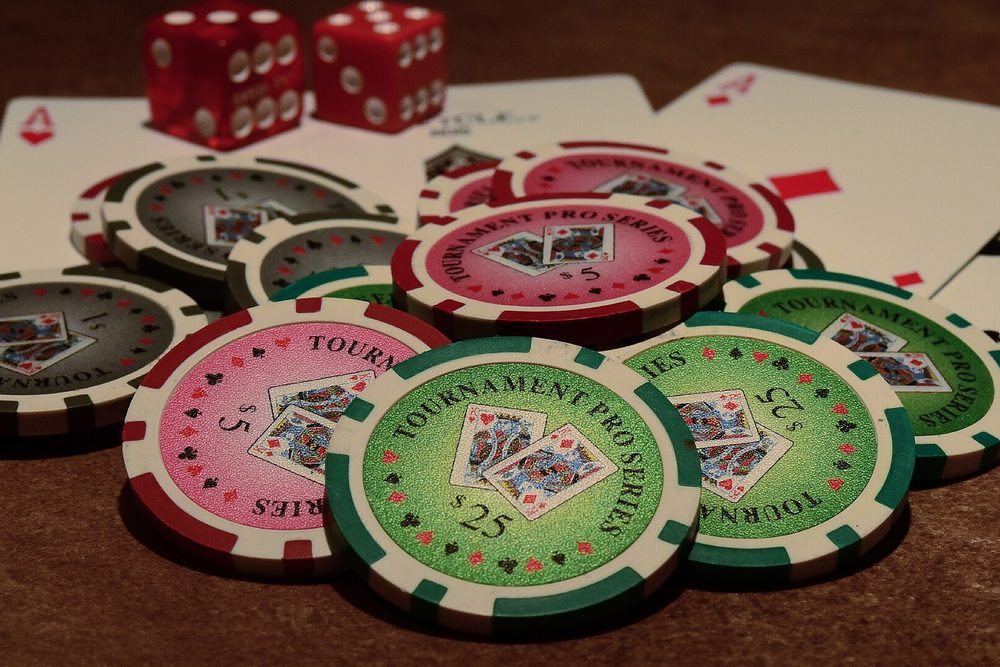
Walk the tournament floor of a major summer series today and you can watch two entirely different games happen under the same roof. In one room, a few dozen players sit down for a buy-in that would cover a year of rent in most cities. Down the hall, a few thousand players are grinding through a field that cost less than a decent dinner for two to enter. Both events carry the same brand name and the same dealer uniforms. They no longer share much else.
This wasn't always the arrangement. For a long stretch of modern tournament poker, buy-ins clustered in a fairly narrow band, and the players inside that band actually crossed paths — at the table, in the media room, at the rail. What broke that arrangement was a two-decade stretch of pulling in opposite directions at once, cheapening entry at one end while making it wildly more expensive at the other. We've come to call it the buy-in arms race, and it changed who shows up, how tournaments are built, and what a poker field even means.
The old middle
Through the 1990s and into the early 2000s, the World Series of Poker Main Event sat at $10,000, a figure fixed since 1972 that functioned as poker's de facto ceiling. Below it sat a fairly continuous ladder: $1,000 events, $2,500 events, $5,000 events, most of them run by the same handful of tours and casinos. A grinder could move up that ladder gradually as bankroll allowed, and it wasn't unusual for a recreational player with some savings to sit at the same table as a touring professional in a $1,500 event.
That middle band was never egalitarian in any strict sense — poker has always required a bankroll — but it was legible. Buy-ins tracked roughly with skill tiers and ambition, not with an entirely separate financial universe. A player could reasonably aim to work up from a $300 daily to a $10,000 Main Event over a few seasons without needing outside capital.
The high end breaks away
The break came into public view in 2012, when Guy Laliberté, the Cirque du Soleil founder and a well-known recreational high-stakes player, backed the creation of the Big One for One Drop at the WSOP: a single $1,000,000 buy-in event built partly to fund water conservation charity work. Antonio Esfandiari won that first running for a prize north of $18 million, and the tournament proved something the industry had suspected but not tested — that a market existed for buy-ins two orders of magnitude above anything on the previous circuit.
From there, a dedicated super high roller ecosystem grew up largely apart from the mainstream schedule. Series such as Triton, launched in 2016 and centered on Asia, normalized buy-ins in the hundred-thousand-dollar range and occasionally beyond, run for fields of a few dozen players, heavily backed by staking arrangements and built as much for livestream production as for the money on the table. These events stopped being the top rung of a single ladder. They became a separate structure with its own economics, largely funded by outside investors rather than the players' own bankrolls.
The low end answers
The mainstream tours didn't stand still. In 2015, the WSOP introduced Colossus, a $565 buy-in event that drew 22,374 entries — at the time, the largest live poker tournament ever held. The message was explicit: bring a modest bankroll and a few days off work, and you could sit in the same convention center, under the same television lights, as the game's biggest names, none of whom were entered that week.
Regional and mid-major circuits followed the same logic. Guarantees ballooned, marketing leaned hard on accessibility, and buy-ins at the low end drifted down even as prize pools drifted up, subsidized by sponsor money and by the sheer volume of entries a cheap event could draw. The economics made sense for organizers: a $500 event with ten thousand entries generates more rake, more room revenue, and more marketing footage than a $5,000 event with four hundred.
What got hollowed out
The casualty of this stretch in both directions was the middle itself. Buy-ins in the $1,000 to $5,000 range — once the backbone of the calendar — grew relatively scarcer as tours pushed players toward either the mega-field low end or the invitation-flavored high end. Satellites became the connective tissue holding the whole structure together, letting a player enter a modest online or live satellite and land a seat in an event several multiples above their usual buy-in, a mechanism that let organizers keep headline buy-ins high without shrinking the actual number of unique players.
Structure design changed too. Mega-field events needed faster levels and shorter Day 1 flights to process thousands of entries within a workable schedule, pushing many mainstream tournaments toward turbo-adjacent structures. At the other end, super high roller final tables, with their concentrated field of professionals and heavy variance per hand, made deal-making — splitting the remaining prize pool by ICM calculation rather than playing to the felt — close to standard practice rather than an occasional courtesy.
Culture, capital, and who gets to sit down
The high end of the arms race also reshaped the business behind the cards. Buy-ins at six and seven figures are rarely funded by a single player's own bankroll; staking and backing arrangements, where investors front the entry fee in exchange for a share of any winnings, became the standard financial architecture of the super high roller world. That's a sober fact about risk allocation, not an endorsement of the practice as a path to income — the overwhelming majority of buy-ins, backed or not, end in a loss for whoever supplied the capital, and tournament poker at any level should be understood as entertainment with real financial risk, never as a plan for making a living.
The arms race didn't make poker more expensive or more affordable — it did both at once, and stopped doing much in between.
- Fields at the low end grew larger, more transient, and more recreational, as five-figure attendance became routine at flagship mid-major events.
- Fields at the high end grew smaller, more professionalized, and more capital-dependent, run for audiences of viewers as much as players.
- The connective tissue between the two — mid-range buy-ins and satellite pathways — became the least glamorous but most structurally important part of the calendar.
None of this resolved poker's oldest tension, between the game as a mass hobby and the game as a closed, high-stakes spectacle; it just gave that tension a visible, dollar-denominated shape. The tournament calendar we cover now is really two calendars sharing a name, and understanding either one means understanding what pulled them apart.
If this is your lane, these go deeper: pot odds and equity and cash games vs tournaments. For more poker writing in English and Spanish, follow us on Facebook.