 EntrePoker
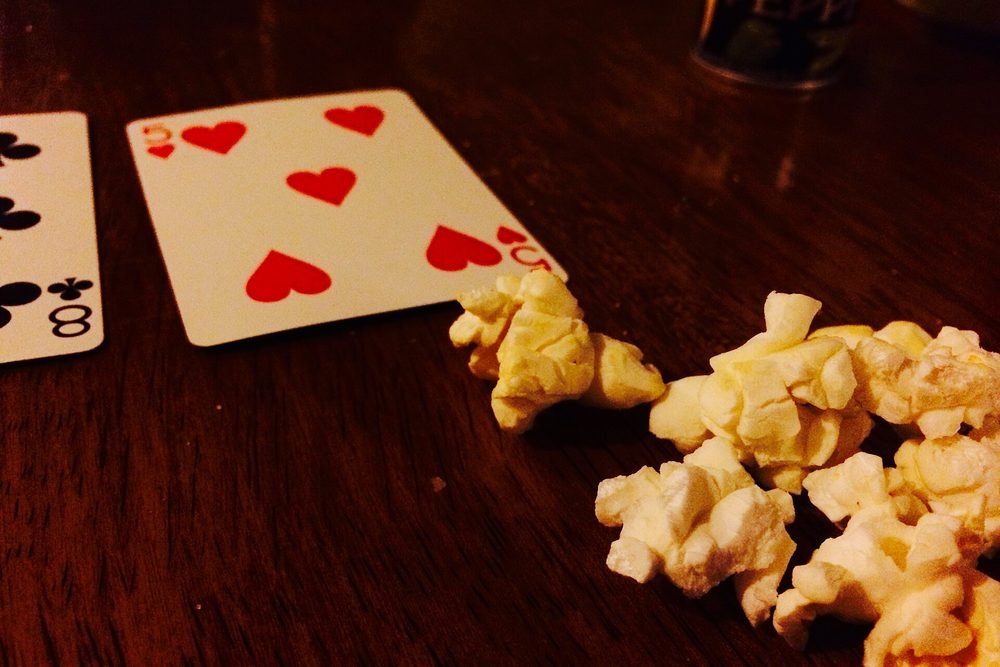
A poker hand, described flatly, is a sequence of bets. Someone raises, someone calls, cards appear, dollars move from one stack to another. Nobody outside the room cares about that sequence on its own. What makes a hand worth watching, or worth writing about, is the story wrapped around it: who these people are, what they risked, what it meant to win or lose. Strip the narrative away and poker is just arithmetic performed slowly.
This is not a complaint. Every spectator sport runs on the same mechanism. A home run means little without the score, the inning, the history between the two teams. Poker simply makes the dependence on narrative more visible, because the game itself is so plain to describe and so hard to judge from the outside. A broadcast has to manufacture context constantly, or the audience leaves.
We want to look at how that manufacturing happens, in television, in writing, and in the stories players tell about themselves, and at what gets lost when the narrative takes over from the game it is supposed to be describing.
How broadcasts build a story out of a card game
Televised poker solved a real problem early on: a game played with hidden information is unwatchable if the viewer cannot see the hidden information. The hole-card camera fixed that, but it only solved the visibility problem, not the meaning problem. Once you can see both hands, you still need a reason to care which one wins. That reason is narrative, and it gets built through editing, commentary and selection.
A broadcast producer chooses which hands to show from hours of play that mostly consist of folds and routine decisions. The hands selected are the ones with a story already loaded into them: a short stack making a stand, a rivalry between two players, a amateur facing a well-known professional. Commentary then narrates the stakes in human terms, not just the pot odds. This is craft, not deception, but it does mean the broadcast version of a tournament is a curated story, not a transcript.
The World Series of Poker Main Event final table is the clearest example of this machinery working as intended. Nine players sit down with wildly different chip stacks, backgrounds and reasons for being there, and the broadcast spends its hours building each one into a character the audience can root for or against. The cards matter, but the characters are what keep people watching a game whose final hands may take a very long time to arrive.
The underdog frame
Poker media leans hard on one particular story shape: the outsider who beats the specialists. An amateur who entered through a low-cost satellite and outlasts a field of seasoned professionals fits a narrative that predates poker by centuries. It is the same shape sports writing uses for a lower-seeded team, and the same shape folk tales use for the youngest son who outwits his older brothers.
The frame is appealing because it is true often enough to feel earned: tournament poker has genuine variance, and a relative newcomer can have a deep run. But the frame also flattens a more complicated reality, in which skill, bankroll management and game selection matter a great deal over time, and in which one good tournament tells you very little about a player's actual level. The story of the lucky amateur is satisfying. It is not a reliable guide to how the game works.
Writing poker: the essay versus the hand history
A hand history, the blow-by-blow record of bets and cards that players post to discuss a decision, is useful precisely because it has no narrative. It is data, stripped of character and stakes, meant for analysis rather than reading pleasure. Poker writing aimed at a general audience has to do the opposite: it has to put the character and the stakes back in, or nobody will read past the first paragraph.
This creates a real tension for anyone writing about the game. The writer who stays closest to the literal sequence of events produces something accurate but inert. The writer who reaches for the largest possible meaning, treating a card game as a parable about courage or fate or the American dream, risks writing something vivid but false, imposing a shape on events that resisted it. The better poker writing tends to sit between those two failures: close enough to the actual hands that a knowledgeable reader does not wince, open enough about meaning that a general reader has a reason to keep going.
Strip the narrative away and poker is just arithmetic performed slowly.
Some of the strongest poker writing of the last several decades has come from writers who were honest about this tension rather than hiding it. They treat the game as a lens for looking at something else, luck, risk, self-deception, American money culture, and they say so, rather than pretending the card game alone carries all the weight.
The stories players tell about themselves
Professional players are also narrators, and the story a player tells about their own game shapes how they are covered and how they are remembered. A player who frames their career around discipline and long-term thinking gets written about differently than one who frames it around feel and intuition, even if their actual results are similar. Media coverage tends to amplify whichever self-story is more quotable, which is not always the one closest to the truth.
This matters beyond reputation. A player's narrative about their own decision-making can become a trap. Someone who has told the story of themselves as fearless for long enough may find it hard to fold when folding is correct, because folding does not fit the character they have built in public and possibly in private. The story written about a player and the story a player tells about themselves can start shaping actual decisions at the table, which is a strange kind of feedback loop for a game that rewards cold calculation.
What gets lost when the story takes over
- Variance gets reframed as destiny: a player who ran well through a tournament is described as having something, nerve, timing, that the cards alone do not support.
- Losses get moral weight they do not deserve, as if a bad result reflects a flaw in character rather than a bad run of cards or a defensible decision that simply did not work out.
- The slow, repetitive grind that makes up most of real play, hours of folding and small decisions, disappears entirely, leaving an impression that poker is more constant drama than it is.
- Risk itself gets romanticized, described as boldness or heart rather than as risk, which matters in a publication that has to be honest about the money side of the game.
None of this means narrative should be stripped out of poker coverage. It means the narrative has to be held a little loosely, treated as the lens it is rather than the thing itself. A good poker story tells you something true about a person under pressure. It should not tell you that the cards obeyed the story.
Why this still matters for a reader who does not play
Most people who read about poker have never sat at a table, and many never will. For that reader, narrative is not decoration, it is the entire reason to care. Nobody who does not play the game needs to understand the mathematics of a river bet to find something worth reading in a story about pressure, identity or risk. The craft of poker writing and poker broadcasting is largely the craft of making a closed, technical game legible to someone who will never need to understand its technique.
That is a real service, done well. It becomes a problem only when the narrative stops serving the reader's understanding and starts serving the story's own momentum, when a tournament gets described as more dramatic than it was, or a player's result gets read as proof of something it cannot prove. The honest version of poker storytelling admits where the story ends and the variance begins.
If this is your lane, these go deeper: cash games vs tournaments and reading your opponents. For more poker writing in English and Spanish, follow us on Facebook.
EntrePoker has affiliate agreements with two rooms today: Americas Cardroom, on the WPN network, and WPT Global. Every other room we cover is a plain link to its own site.
Visit Americas Cardroom Visit WPT Global
18+ Affiliate links: if you sign up through them, EntrePoker may earn a commission at no extra cost to you. It does not change what we write. Full disclosure · Responsible gaming