 EntrePoker
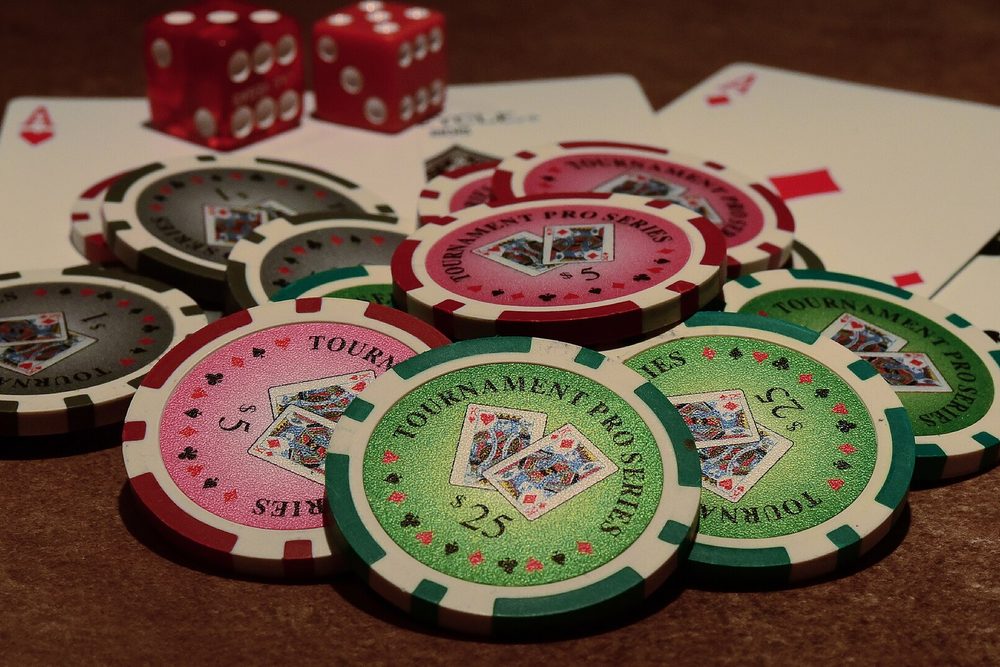
You are on the flop with a flush draw. The pot holds 80 chips and your opponent bets 40. You have a few seconds of tension and one concrete question: call or fold? The answer comes from a division you can do in your head, and that division is called pot odds.
What pot odds are
Pot odds compare what you have to put in with what you can win. If calling costs 40 and the pot, counting your opponent bet, already holds 120, you put in 40 to fight for 120. As a ratio, the pot pays you 3 to 1.
The percentage version is the one most players use at the table: what you pay divided by the final pot after you call. Here, 40 divided by 160 (80 in the pot, 40 for the bet and 40 for your call) is 25%. That 25% is the minimum equity you need for calling not to lose money in the long run.
Going from ratio to percentage is quick: add 1 to the first number and divide 1 by the result. A ratio of 3 to 1 gives 1 divided by 4, which is 25%. A ratio of 2 to 1 gives 1 divided by 3, which is 33.3%.
The price at each bet size
With 100 in the pot before the bet, each bet size gives you a different price. The numbers come from what you pay divided by the final pot:
- Bet of 25 (a quarter of the pot): you pay 25 to win 125, ratio 5 to 1, equity needed 16.7%.
- Bet of 50 (half pot): you pay 50 to win 150, ratio 3 to 1, equity needed 25%.
- Bet of 100 (pot): you pay 100 to win 200, ratio 2 to 1, equity needed 33.3%.
- Bet of 200 (double pot): you pay 200 to win 300, ratio 1.5 to 1, equity needed 40%.
The bigger the bet, the more expensive the call. That is why an opponent who always bets the pot demands much more from you than one who bets a quarter.
Example 1: flush draw on the flop
You hold two hearts and two more are on the flop. Nine hearts are left among the 47 cards you cannot see. The pot is 80, your opponent bets 40, and the equity you need is 25%, as calculated above.
With one card to come, 9 out of 47 is 19.1%. With both remaining cards, the chance of hitting at least one rises to about 35% (the rule of 4 gives 36%, a good approximation). If you call knowing you will see the turn and river without further bets, 35% beats the 25% you need and the call is profitable. If instead your opponent will bet again on the turn, paying that second street is judged with 19.1% against the cost of that bet, and there the number is much tougher.
This is the point that causes the most mistakes: the two-card equity only applies if you really will see both cards for free or for a single payment. In practice, most flop calls are checked with the rule of 2 for the next card and adjusted once later bets appear.
Example 2: open-ended straight draw on the turn
You reach the turn with an open-ended straight draw, 8 outs. The pot is 60 and your opponent bets 60. You pay 60 to fight for 180, so you need 60 divided by 180, which is 33.3%.
You have one card left. 8 out of 46 unseen cards is 17.4% (the rule of 2 gives 16%). You are far from the 33.3% the price asks for, so calling loses money if you only think about the current pot.
Implied odds: what is left to collect when you hit
Implied odds add what you expect to win on later streets when you complete your hand. In example 2, how much extra would you need to collect for the call to break even? If you hit, you win the pot of 120 plus whatever extra you get. If you miss, you lose 60. With a 17.4% chance of hitting, the math says you need to collect about 165 more chips when you get there to reach zero.
That number is the reality check. Ask yourself whether this opponent, with this stack behind, would pay you 165 more after your straight arrives. With a short stack behind or an opponent who gets scared when the straight card lands, the answer is usually no. With deep stacks and an opponent who pays, it can be yes. Implied odds are an excuse to call far less often than it seems.
A method for the table
- Add your opponent bet to the pot and work out what you have to pay.
- Divide what you pay by the final pot: that is your required percentage.
- Count your outs and estimate equity with the rule of 2 (one card) or the rule of 4 (two cards, only if you will see them).
- If your equity beats the required percentage, call. If it falls short, ask whether implied odds cover the gap.
Pot odds give you the price of seeing the next card. The final decision also looks at stack size, position and what you know about the opponent, but the price is the first piece of data and it takes seconds. To practice, repeat the examples above with other numbers before your next session.
18+ | Play responsibly.
If this is your lane, these go deeper: why position wins pots and pot odds and equity. For more poker writing in English and Spanish, follow us on Facebook.