 EntrePoker
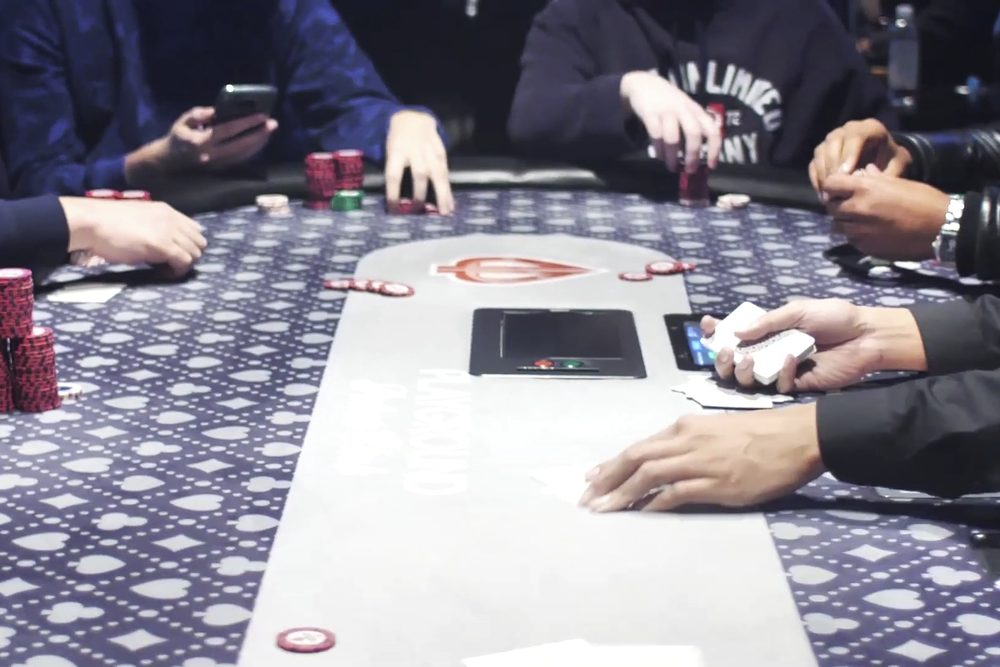
Every poker player has a word for the moment things go wrong in their head before they go wrong on the felt. In English it's tilt, borrowed from pinball machines that locked up when you shook them too hard. The metaphor is better than most players give it credit for. A tilted pinball machine doesn't break. It just stops registering your input correctly. That is closer to what happens to a human brain under stress than the usual talk of "going on tilt" as some kind of character flaw.
For most of poker's modern history, tilt was treated as a personal weakness to be willed away. Books told players to "stay disciplined." That advice wasn't exactly wrong, but it wasn't useful either, because it described the symptom and ignored the mechanism. Sport psychology, the field that studies how athletes perform and fail under pressure, has spent decades building a more precise picture of what tilt actually is, and some of that thinking has gradually made its way into how poker players and coaches talk about the problem.
Tilt is not an emotion, it's a state change
The clearest contribution from sport psychology is a definitional one. Anger, frustration and disappointment are emotions. Tilt is what happens when one of those emotions crosses a threshold and starts interfering with the cognitive processes a player needs to make decisions: working memory, attention control, impulse inhibition. Researchers who study choking under pressure in golf, tennis and chess describe a similar mechanism under different names. The common thread is that stress narrows attention and pushes the brain toward faster, more automatic responses, which is useful when you're being chased by something and useless when you're deciding whether to call a three-bet.
This reframing matters because it changes what you're supposed to do about it. You cannot talk yourself out of an emotion by force of will in the middle of experiencing it, that much is well established in psychology. What you can do is interrupt the state change before it fully takes hold, or build habits that make the threshold harder to cross in the first place. That is a very different project than "just calm down," and it's the project sport psychology has actually been working on.
What the research on choking actually shows
The psychological literature on performance under pressure, much of it built around golf putting, free throws and penalty kicks, converges on two mechanisms. The first is explicit monitoring: when a skilled, usually automatic action suddenly gets flooded with conscious attention, performance gets worse, not better. The second is distraction: anxiety consumes working memory that the task needs, so complex decisions degrade even when the player feels like they are concentrating harder than ever.
Poker has a feature that golf doesn't: the decisions are rarely simple motor skills, they're probabilistic judgments made under incomplete information. That makes poker tilt closer to the distraction model than the monitoring model. A tilted player isn't overthinking a simple task, they're trying to do a hard task with less cognitive capacity than they had five minutes earlier. This is why the same player who makes a sound fold at 8pm makes a reckless call at midnight after two bad beats. Nothing about their strategic knowledge changed. Their available bandwidth did.
Tilt is not a crack in character, it's a drop in cognitive bandwidth, and bandwidth can be measured, trained and protected.
How this thinking reaches the table
The practical shift here isn't a new theory, it's translation. Ideas built for individual sports like shooting, golf and tennis are slowly being adapted for poker, where coaches and writers borrow language and protocols from fields that treat performance under pressure as a trainable skill rather than a fixed trait. A few patterns stand out in how this adaptation tends to work.
- A move away from generic 'mental game' coaching toward protocols borrowed directly from pre-performance routines in individual sports, things like fixed breathing counts and physical reset cues used between points in tennis.
- Interest in physiological signals, borrowed from training methods used in other high-pressure sports, as a way to give players an objective marker of rising stress before they feel it subjectively.
- A shift in language away from the old 'mental toughness' framing and toward load management, the same vocabulary used for athlete fatigue and injury prevention.
None of this is dramatic. It's the slow adoption of tools that other high-pressure performance fields built first. Poker was simply late, partly because for a long time it didn't think of itself as a performance discipline in the same category as sport.
Why the old advice missed the point
"Take a break when you're tilted" is not wrong, but it assumes a player can accurately detect their own tilt in the moment, which the distraction research suggests is exactly the capacity that degrades first. If anxiety consumes the working memory needed for self-monitoring, then asking a stressed player to notice they're stressed is asking them to use the resource that's already running low. This is why external, objective signals, a rising heart rate, a timer, a session log, do something that willpower alone cannot: they catch the state change before the player's own judgment is compromised enough to miss it.
There is also a financial dimension that sport psychology doesn't touch directly but that poker commentary has to be honest about. Tilt-driven decisions in poker tend to increase variance and risk, not manage it, and a player chasing losses under emotional strain is making the exact decisions most likely to turn a bad session into a worse one. None of the research here suggests tilt management turns poker into a reliable source of income. It suggests something narrower and more defensible: that reducing decision quality under stress is a real, studiable problem, and that treating it as one gives players better tools than moralizing about discipline ever did.
What this looks like in practice
The protocols that sport psychology actually supports are unglamorous. Fixed session lengths decided before sitting down, not during play. Short, scheduled breaks regardless of how the session feels. Breathing patterns practiced away from the table so they're automatic under stress, not learned for the first time while stressed. None of these require buying anything or learning a system, which may be part of why they got less attention than they deserved for so long. They aren't sold as a product. They're just a maintenance routine, closer to stretching before a match than to any kind of strategic edge.
The quieter idea underneath all of this is that tilt stops being mysterious once you stop treating it as a moral failure and start treating it as a predictable, physiological event with early signals. That reframing doesn't make poker safer or more profitable. It makes the experience of playing it more honest about what is actually happening inside a stressed brain.
If this is your lane, these go deeper: pot odds and equity and reading your opponents. For more poker writing in English and Spanish, follow us on Facebook.
EntrePoker has affiliate agreements with two rooms today: Americas Cardroom, on the WPN network, and WPT Global. Every other room we cover is a plain link to its own site.
Visit Americas Cardroom Visit WPT Global
18+ Affiliate links: if you sign up through them, EntrePoker may earn a commission at no extra cost to you. It does not change what we write. Full disclosure · Responsible gaming