 EntrePoker
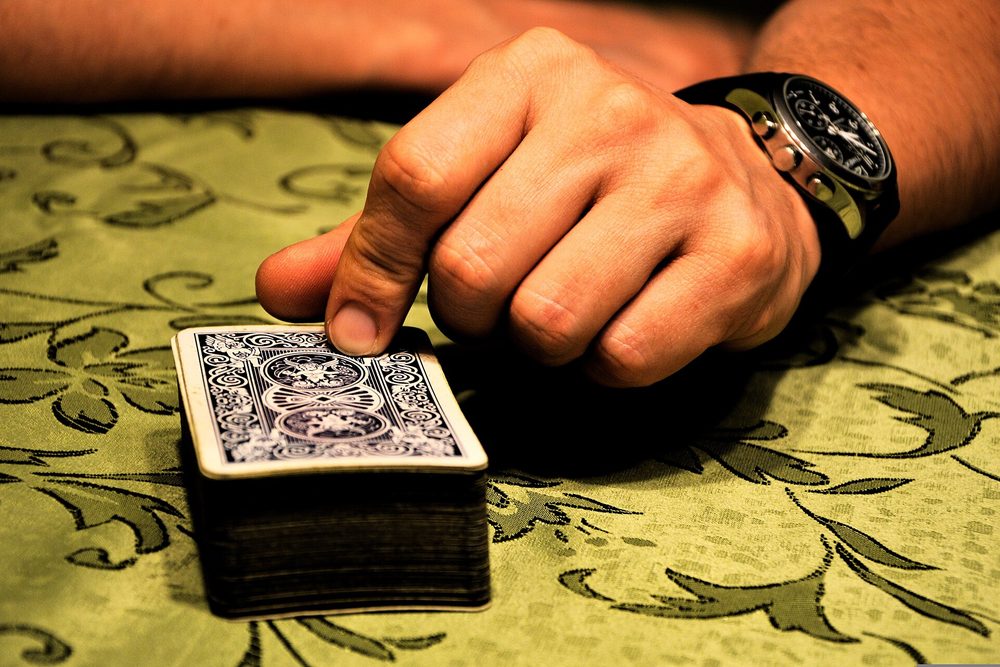
Walk the rail at any major festival during the late registration period and you will hear a version of the same conversation. Someone won a seat through a satellite, cannot travel, and is asking around if anyone wants to buy it off him. Someone else has a package deal, flight and hotel and buy-in bundled, and a work conflict just came up. The tournament staff are not involved. The poker room's terms and conditions almost certainly forbid what is about to happen. And yet it happens, every festival, every year, in hallways and on messaging apps, quietly enough that nobody has to pretend it isn't.
This is the second-hand market for tournament tickets: seats, packages and satellite wins that get transferred from the person who earned or bought them to someone else, usually for money, almost always outside any official channel. It is not organized. There is no clearinghouse, no listed price, no company whose logo appears on it. That is precisely what makes it interesting, and precisely why the industry would rather not talk about it.
How a tournament seat becomes a tradable thing
A buy-in is, on paper, a non-transferable entry fee paid to a cardroom in exchange for a seat in a specific event. In practice it behaves like an asset the moment a satellite is involved. A player spends a small amount to win a shot at a much larger buy-in. If they win that shot, they are holding something with a market value roughly equal to the cost of entering the main event directly, sometimes more if the overall package includes travel and accommodation. That value exists whether or not the winner ever intends to play.
Festival operators lean on satellites precisely because they drive volume and because they create a kind of lottery excitement around a modest stake. The side effect is that they also mint a steady supply of small transferable windfalls. Some winners play. Some cannot, for reasons that have nothing to do with poker: a visa denial, a family emergency, a scheduling conflict with a job that does not care about a World Series of Poker bracelet event. When that happens, the seat does not vanish. It moves.
Why rooms write rules against it, and why those rules bend
Nearly every major operator's terms state that seats and packages are non-transferable, non-refundable and tied to the name on the registration. The stated reasons are reasonable on their face: anti-money-laundering obligations, know-your-customer rules, and a general interest in knowing who is actually sitting at a felt table with a camera on it. A tournament director does not want to discover, mid-event, that the person at seat four is not the person whose passport was checked at sign-up.
In practice, enforcement is inconsistent. Many rooms will quietly process a name change if the original winner shows up with the buyer, both parties present identification, and the transfer looks more like a formality than a scheme. Others refuse outright and force the original winner to either play or forfeit. The difference often comes down to the discretion of whoever is behind the registration desk that day, not a written policy applied the same way twice.
A buy-in behaves like an asset the moment a satellite is involved, whether or not anyone admits it.
The money changes hands before the room ever finds out
The actual transaction, the part where cash or a transfer moves from buyer to seller, happens off the operator's books entirely. A seat that satellites for a fraction of a main event's cost might sell privately for somewhat less than full face value, since the buyer is taking on the hassle and risk of an unofficial transfer. Nobody prices this precisely because nobody is tracking it. It is closer to a handshake deal between two strangers who happen to be standing in the same hallway than to any kind of formal resale.
What the industry doesn't say out loud
Operators benefit from satellites filling fields and generating buzz, and they benefit from packages that look attractive on a promotional page: flight, hotel, buy-in, one price. They do not benefit from publicly acknowledging that a meaningful share of those seats end up changing hands informally, because doing so would invite two uncomfortable questions. First, why does the identity verification process bend so easily when a transfer is convenient for everyone involved. Second, what happens to the losing side of a private resale when there's a dispute and nobody official was ever a party to the deal.
There is also a quieter commercial logic at work. A seat that gets resold is a seat the room already sold once. The transaction itself costs the operator nothing and the field still fills. Looking too closely at how that seat found its final occupant risks slowing down a process that otherwise runs smoothly and profitably for everyone wearing a staff lanyard.
- Identity checks at registration are real, but a cooperative transfer where both parties appear in person often clears them without much friction
- Packages bundled with travel are harder to resell cleanly because airline tickets and hotel reservations are usually in a specific name
- Disputes over an informal resale have no official arbitration path, since the room never recognized the transfer as happening
- Price in these private deals tends to sit below full value, reflecting the buyer's exposure to a transfer that might not be honored
The risk sits entirely with the two people making the deal
Because none of this runs through an operator, both sides are exposed in ways a normal ticket resale would not be. A buyer who hands over cash for a satellite win has no guarantee the seller will actually show up to complete whatever identity formality the room requires, or that the room will accept the substitution at all on the day. A seller has no guarantee the buyer won't simply walk away once they're checked in, leaving the original winner's name attached to an event they no longer control.
This is not a story about anyone getting rich. The sums involved, a satellite seat worth a few hundred dollars, a package worth somewhat more, are modest next to the amounts that circulate in the actual tournament structure itself. The second-hand market exists because life intervenes between the moment someone wins a shot and the moment that shot gets played, not because there is a hidden income stream to be mined from it.
A market that works precisely because nobody names it
What keeps this functioning is its informality. If an operator built an official resale desk, it would have to absorb liability, formalize the identity checks, and probably charge a fee, at which point the convenience that makes the practice useful in the first place mostly disappears. If regulators forced the issue, most rooms would likely tighten the non-transfer language and enforce it harder, closing a door that currently stays open through simple inattention.
So the practice continues the way it always has: in hallways, on phones, between people who met twenty minutes earlier and will probably never see each other again after the transfer clears or falls through. Nobody from the industry is going to put this in a press release, not because it is scandalous, but because naming it clearly would force a choice between shutting it down and formally sanctioning it. For now, the quiet arrangement at the edge of the tournament desk suits almost everyone involved, including the people whose job it is to notice.
If this is your lane, these go deeper: cash games vs tournaments and bankroll management. For more poker writing in English and Spanish, follow us on Facebook.
EntrePoker has affiliate agreements with two rooms today: Americas Cardroom, on the WPN network, and WPT Global. Every other room we cover is a plain link to its own site.
Visit Americas Cardroom Visit WPT Global
18+ Affiliate links: if you sign up through them, EntrePoker may earn a commission at no extra cost to you. It does not change what we write. Full disclosure · Responsible gaming