 EntrePoker
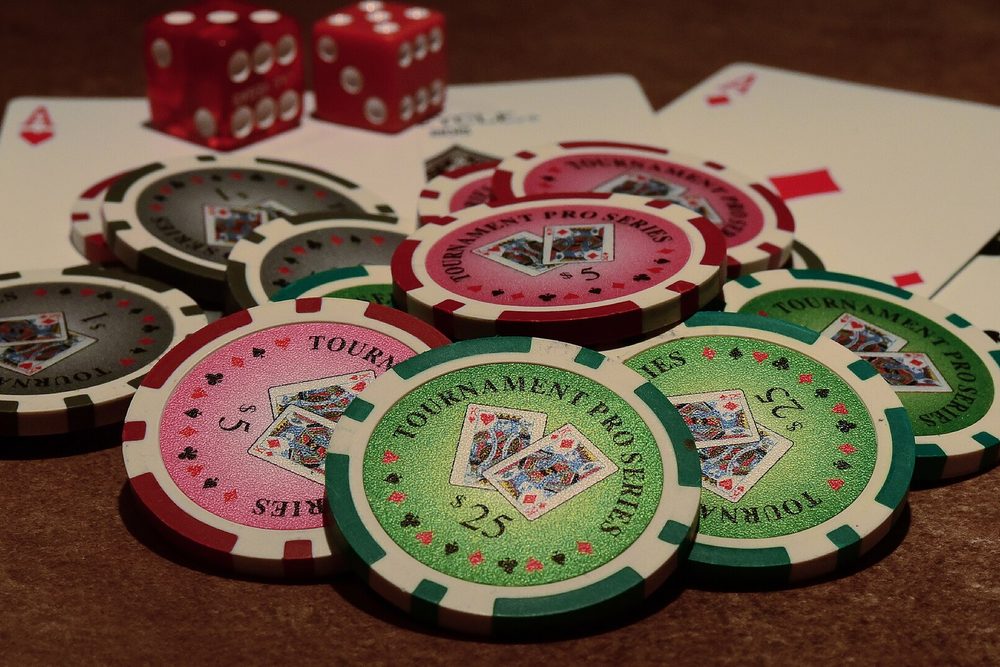
Every poker game ever dealt has rewarded the player who reads the table better than the people sitting at it. That is not a flaw in the game. It is the game. And yet the question of whether it is right to sit down against someone clearly worse than you, someone drunk, someone grieving, someone who has never played a hand of cards for money in their life, has followed poker since the moment it moved from the riverboat to the felt-topped table and then to the screen.
We want to trace how that question got asked at all. Poker spent most of its history as a private contest between people who chose each other's company. The ethics only became a public conversation once the game grew an audience, a television camera, and eventually a lobby full of strangers who could be anyone.
The riverboat and the home game: a closed circuit
Poker's documented history in North America runs through the Mississippi riverboats of the 1830s and 1840s, where professional gamblers worked passenger traffic that included merchants, planters, and travelers with cash and little card experience. The arrangement was understood by both sides. A riverboat was a small, visible world. If a sharp took a mark for his money, word traveled, and the sharp's welcome at the next landing could run out fast.
The home game that followed, in back rooms, legion halls, and kitchen tables across the twentieth century, kept that same social contract. Everyone at the table knew roughly who was good and who wasn't. The better players usually knew the other players personally, which meant the game carried a social cost for playing too hard against a friend who was struggling. Through decades of Texas road gambling and similar circuits, reputation, more than any outside rule, kept the worst abuses in check.
The World Series of Poker and the birth of the public amateur
Benny Binion's World Series of Poker, running at the Horseshoe in Las Vegas since 1970, changed the shape of the question by inviting strangers to pay their way into games against the best players alive. The buy-in was the entry fee for exactly the kind of mismatch that used to require a personal introduction. By the 1980s and 1990s, the Main Event had become a venue where an amateur with a dream and a disposable bankroll could sit three seats from a player who had spent decades at the table.
Nobody questioned the ethics of this arrangement in any serious way, because the amateur had opted in with open eyes. The entry fee was the disclosure. You paid to play, and you knew, or should have known, what you were paying for.
Chris Moneymaker and the online flood
The real turn came in 2003, when Chris Moneymaker, an accountant from Tennessee, won the WSOP Main Event after qualifying through a $39 satellite on an online site. Television coverage of that run, combined with the spread of hole-card cameras that let viewers see what each player held, turned poker into a spectator sport almost overnight. Online poker sites saw a wave of new depositors who had learned the game from television rather than years at a table.
This is where the ethical question stopped being theoretical. Online poker put thousands of inexperienced players, often playing with real money for the first time, into anonymous pools against players who had studied the game seriously, sometimes using software to track hand histories and tendencies. The social contract of the riverboat and the home game, where everyone roughly knew what they were getting into, had no equivalent online. A new depositor had no way to know that the player across the virtual table had logged ten thousand hands that month.
The ethics of poker never lived in the rules of the game. They lived in what each player knew about the other, and that knowledge collapsed the moment poker went online.
What the industry built in response
Regulators and operators did not ignore the imbalance, even if the response took years to arrive in full. Several measures now shape how the gap between strong and weak players gets handled, at least on regulated sites:
- Heads-up display and tracking software bans or restrictions on many major platforms, limiting a skilled player's ability to mine statistics on opponents in real time.
- Account-level spending controls that let a player set their own voluntary deposit limits on regulated sites.
- Segregated player pools or seating restrictions that keep recognized high-volume players out of tables flagged as beginner-heavy, used by some operators to manage churn.
- Responsible gambling messaging and self-exclusion tools required by regulators such as the UK Gambling Commission.
None of these measures change the core fact of the game. A skilled player who sits at any table with weaker players, live or online, still has an advantage, and that advantage is still exactly what poker has always paid for. What changed is the industry's acknowledgment that an anonymous, high-volume marketplace creates a different kind of mismatch than a friend's kitchen table ever did.
Why the question resists a clean answer
Poker is not blackjack, where the house has a fixed mathematical edge regardless of who sits down. It is a game played against other people, and skill differential is the entire economic engine that makes professional and semi-professional poker possible at all. Ask any player who has supplemented other income with cash games for decades, and they will tell you plainly that their income depended on a steady supply of players who were worse than they were. There is no version of poker, at any stakes, where this stops being true.
The ethical weight shifts, we think, not on skill gap but on consent and awareness. A visitor who sits down at a casino table during a vacation, chips in hand, understands in a general way that professionals play this game and that losing is a real possibility. A grieving widow playing her late husband's online account, or a problem gambler chasing losses at 3 a.m., has not consented to anything in a meaningful sense. The skill gap is identical in both cases. The ethics are not.
What a thoughtful player actually owes the table
We don't think poker asks its players to go easy on weaker opponents, and we would be skeptical of anyone who claimed they do this consistently; the game doesn't reward it and most players, if honest, don't practice it. What it reasonably asks is narrower and harder to dodge:
- Recognize visible signs of distress, intoxication, or compulsive behavior and decline to exploit them, which is different from declining to win a hand.
- Support the tools, like deposit limits and self-exclusion, that let a weaker or vulnerable player set their own boundaries before sitting down.
- Treat a losing opponent, especially a clearly overmatched one, with the kind of ordinary decency that costs the winner nothing.
These are modest asks. They don't require anyone to play worse or to leave winnings on the table. They ask a player to notice who is across from them, which is a different skill than reading a bet, but one the best players at any table have usually already developed.
Poker has never needed its players to be equal to be fair. It has needed them to be honest about what they're doing, to each other and to themselves, and that is a standard the game has taken more than a century and a half to build the tools to support.
If this is your lane, these go deeper: bankroll management and why position wins pots. For more poker writing in English and Spanish, follow us on Facebook.
EntrePoker has affiliate agreements with two rooms today: Americas Cardroom, on the WPN network, and WPT Global. Every other room we cover is a plain link to its own site.
Visit Americas Cardroom Visit WPT Global
18+ Affiliate links: if you sign up through them, EntrePoker may earn a commission at no extra cost to you. It does not change what we write. Full disclosure · Responsible gaming